Hydrogen sulfide (H2S) removal depends almost entirely on concentration. The right system for 1 PPM is different from the right system for 10 PPM. Know your number before buying anything.
H2S removal by concentration
| Under 1 PPM | Catalytic carbon filter — simple, no backwash needed |
| 1–8 PPM | Air injection oxidation — Springwell WF1, Kinetico AIO |
| 8–15 PPM | Peroxide injection + carbon filter |
| Above 15 PPM | Aeration + chemical oxidation — professional system |
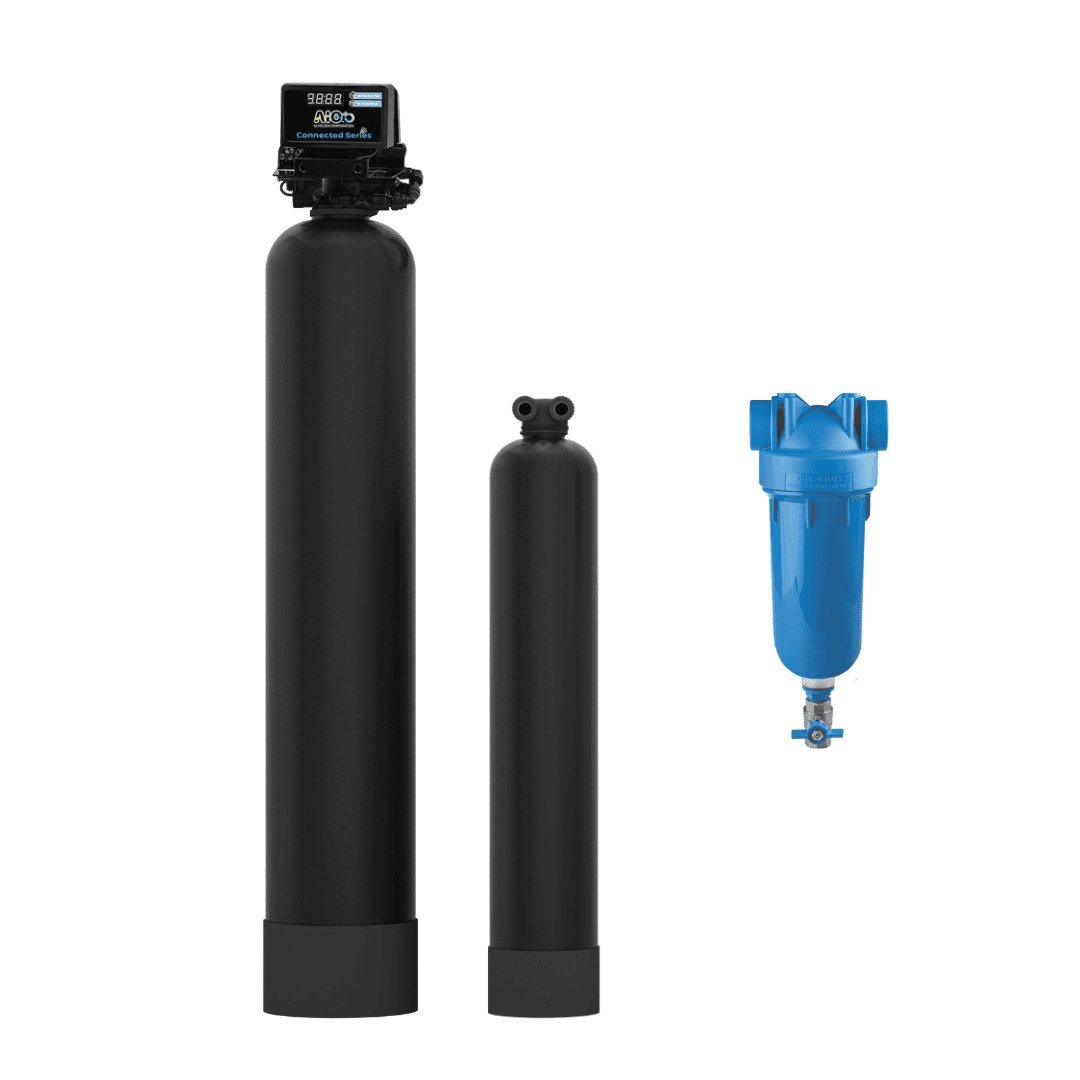
Air injection oxidation — the standard solution
For most well water H2S problems (under 8 PPM), air injection oxidation is the right fix. The system maintains an air pocket in the tank. H2S passes through the air, oxidizes, and the sulfur particles are trapped in the media bed and backwashed away during the automatic daily cycle.
The Springwell WF1 handles up to 8 PPM H2S in addition to iron and manganese — making it a single-tank solution for the three most common well water problems.
Springwell WF1 — Removes H2S up to 8 PPM →Peroxide injection — for higher H2S levels
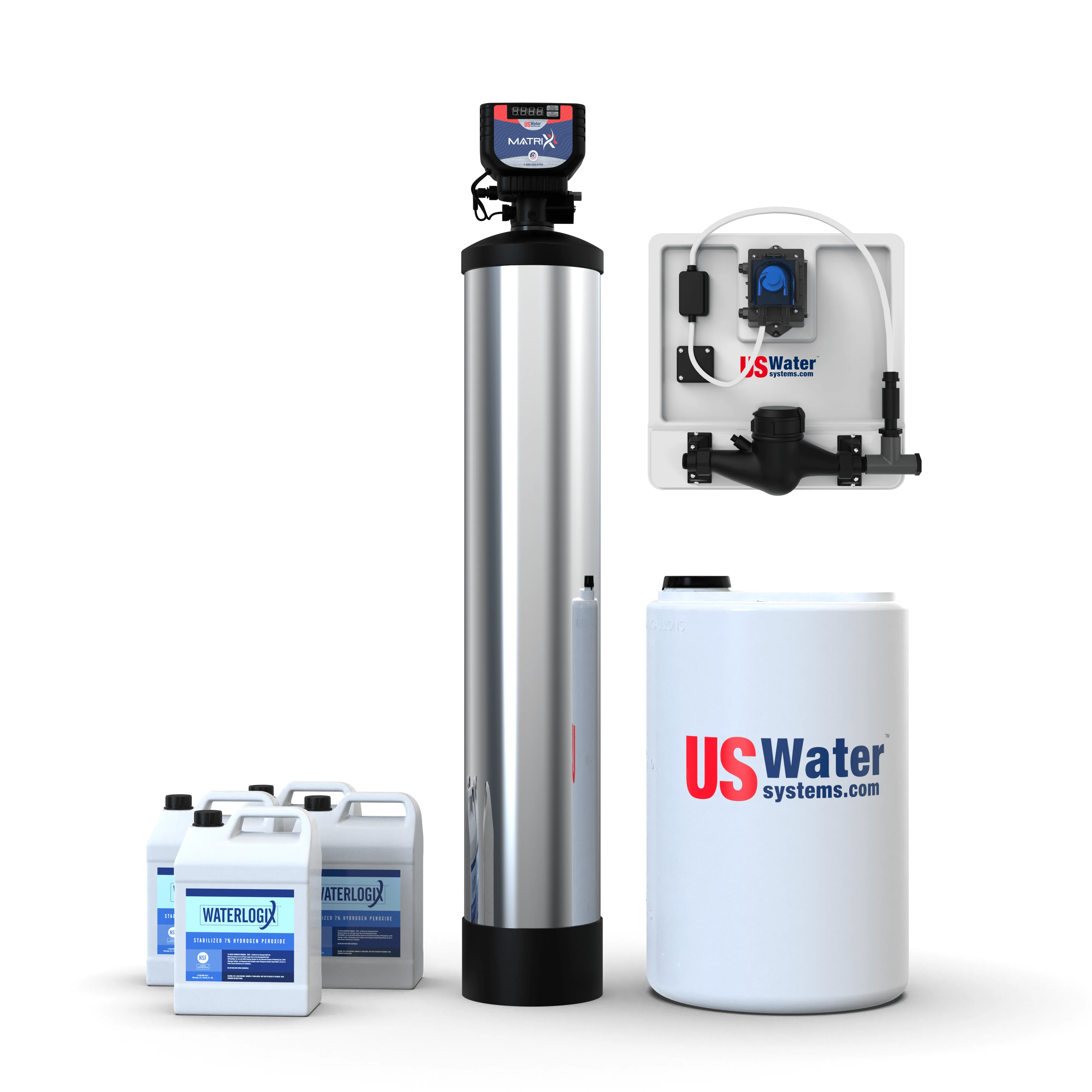
When H2S exceeds what air injection can handle, hydrogen peroxide injection is the next step. A chemical dosing pump injects a small amount of food-grade hydrogen peroxide into the water line ahead of a carbon filter. The peroxide oxidizes H2S instantly and completely, and the carbon filter removes any peroxide residual.
Full guide: Dosing ratios, media compatibility, the disinfection warning, and commissioning — hydrogen peroxide well water treatment →
- Handles H2S concentrations from 5–30+ PPM
- Peroxide breaks down to water and oxygen — no chemical residual concerns
- Ongoing cost for peroxide solution ($150–$300/year)
- More complex system — dosing pump requires calibration
Does H2S indicate other problems?
Not always, but it's worth investigating. H2S often coexists with sulfur-reducing bacteria, iron bacteria, and low dissolved oxygen conditions. If your water also has iron staining, get a full water test rather than testing for H2S alone — a single treatment system (like the WF1) may address multiple issues at once.
Our top picks by H2S concentration
There is no single best H2S filter — the right system depends entirely on your PPM level. These are the systems we recommend at each tier.
Air injection oxidation handles the majority of residential H2S problems. The WF1 removes up to 8 PPM H2S alongside iron (7 PPM) and manganese (1 PPM) in a single tank — no chemicals required.
| H2S removal | Up to 8 PPM |
| Iron removal | Up to 7 PPM |
| Flow rate | 12–20 GPM |
| Backwash | Automatic daily |
| Media life | ~10 years |
For mild sulfur odor under 1 PPM, a whole-house catalytic carbon filter is the simplest and most cost-effective fix. The Fleck-valved systems are the most reliable long-term.
| H2S removal | Up to ~1 PPM |
| Media type | Catalytic carbon |
| Flow rate | 12–15 GPM |
| Filter life | ~5 years |
| Price range | $400–$700 |
For H2S above 8 PPM: You need a chemical injection system — peroxide or chlorine — followed by a carbon filter. This requires professional sizing and installation. At those concentrations, get a water test from a certified lab first, then consult a water treatment specialist.
How to test your H2S level
Before buying any system, you need a number — not just a smell. The strength of the odor does not reliably indicate PPM concentration.
| Test method | Cost | Accuracy | Best for |
|---|---|---|---|
| Home test strip | $10–$30 | Low (ballpark only) | Quick initial check |
| Colorimetric field kit | $30–$60 | Medium (±0.5 PPM) | Narrowing down treatment tier |
| Certified lab test | $50–$150 | High (±0.05 PPM) | Before buying any system over $500 |
H2S dissipates quickly from water samples — for accurate lab results, use a pre-preserved sample bottle from the lab and test within 6 hours of collection.
Air injection vs catalytic carbon vs peroxide — when to use each
| Method | H2S range | Also removes | Maintenance | Cost |
|---|---|---|---|---|
| Catalytic carbon | <1 PPM | Chlorine, VOCs, taste/odor | Replace media every 5 years | $400–$700 |
| Air injection oxidation (AIO) | 1–8 PPM | Iron, manganese | Annual media check, backwash automatic | $800–$1,500 |
| Peroxide injection + carbon | 8–15 PPM | Iron, bacteria, manganese | Peroxide tank refill every 1–3 months | $1,500–$3,000 |
| Aeration + chemical oxidation | >15 PPM | Iron, manganese, bacteria | Professional service required | $3,000+ |
Common mistakes when treating H2S in well water
Buying a system without testing first. The most expensive mistake. A $1,200 air injection system is overkill for 0.5 PPM H2S. A $400 catalytic carbon filter won't touch 5 PPM.
Ignoring iron when treating H2S. H2S and iron often appear together. If you have both, a system like the Springwell WF1 handles both in one tank. Installing two separate systems costs more and takes up more space.
Not addressing the water heater separately. If the smell is only in hot water, the problem is usually sulfur bacteria reacting with your water heater's magnesium anode rod — not the well itself. Replace the anode rod with an aluminum/zinc rod. It's a $30 fix that whole-house systems won't solve.
Frequently asked questions
What is the best filter for hydrogen sulfide in well water?
For most homes with 1–8 PPM H2S, an air injection oxidation system like the Springwell WF1 is the best choice — it removes H2S without chemicals and handles iron simultaneously. For under 1 PPM, a catalytic carbon filter is simpler and cheaper. Above 8 PPM requires chemical injection.
How do I know if my well water has hydrogen sulfide?
The signature sign is a rotten egg or sulfur smell, especially when running water that hasn't been used for a while. However, odor strength doesn't indicate concentration — you need a water test. H2S test strips or a certified lab test will give you the PPM level you need to choose the right system.
Will a water softener remove hydrogen sulfide?
No. Standard ion-exchange water softeners do not remove H2S. Some softeners can handle trace amounts under 0.5 PPM, but they are not designed for H2S removal and the resin will foul quickly at higher concentrations. You need a dedicated H2S filter — either catalytic carbon or air injection — upstream of any softener.
Can hydrogen sulfide in well water make you sick?
At typical residential concentrations (under 1–5 PPM), H2S is a nuisance rather than a health hazard. It causes bad taste, corrosion of plumbing fixtures, and can affect laundry. At very high concentrations (above 1 PPM in air), it becomes a safety concern — but waterborne H2S at residential levels is not known to cause illness.
How long does it take for an air injection filter to remove H2S?
An air injection system removes H2S on contact — there's no delay once the system is properly installed and commissioned. The first day or two may have some odor while the system purges and the air pocket establishes. After that, properly treated water should have no detectable sulfur smell.