Sulfur smell = hydrogen sulfide. It's fixable — but the fix depends on concentration.
Hydrogen sulfide (H2S) is a dissolved gas that forms naturally in well water from sulfur-reducing bacteria or from geologic sources. At low concentrations (under 1 PPM) a carbon filter handles it. At moderate levels (1–8 PPM) an air injection system like the Springwell WF1 is the right tool. At high concentrations (8+ PPM) you need chemical injection.
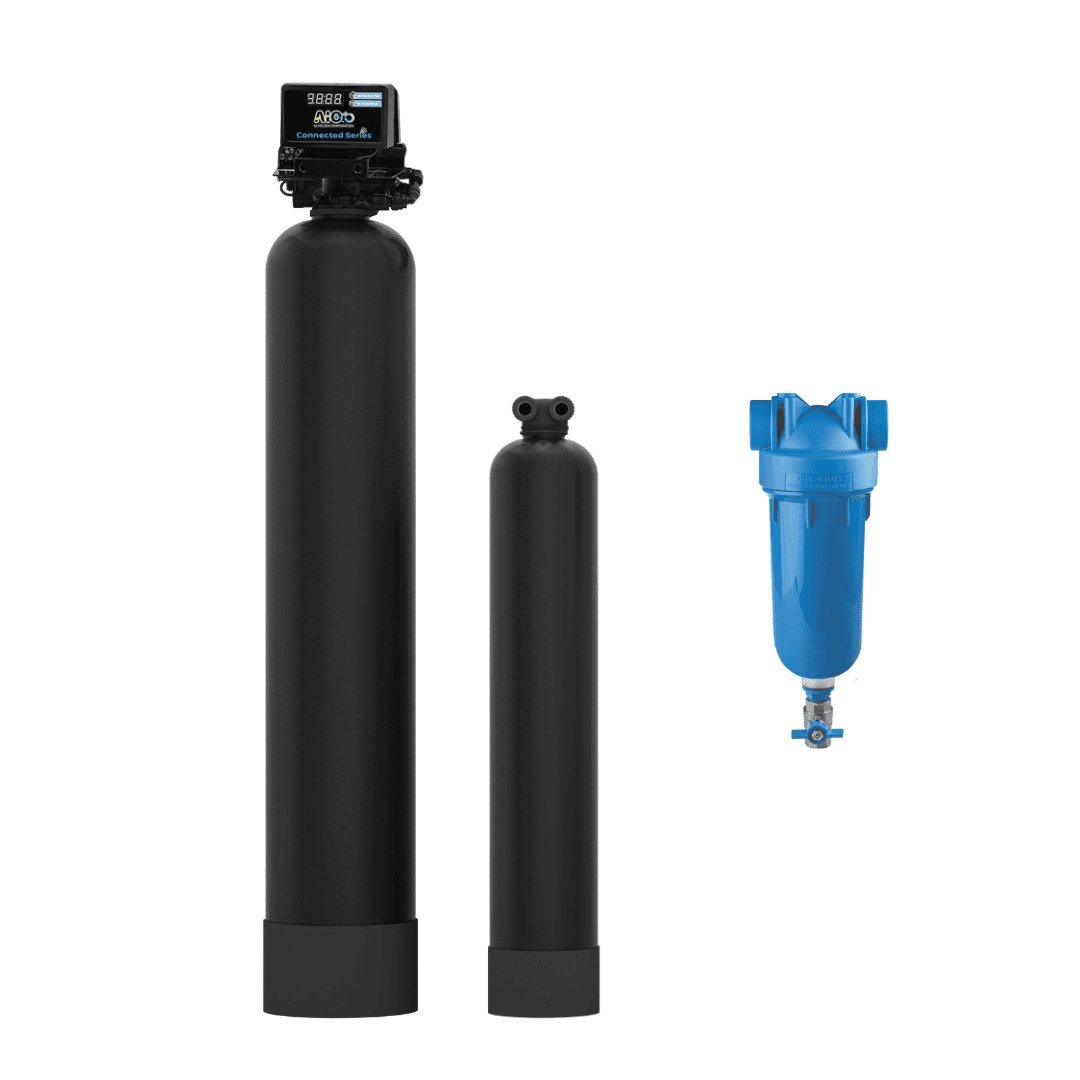
What causes the sulfur smell in well water
- Sulfur bacteria — bacteria that feed on sulfur compounds and produce H2S as a byproduct. Most common cause. The bacteria aren't usually harmful themselves but the smell is intolerable.
- Geologic sources — H2S dissolving directly into groundwater from sulfur-containing rock formations. No bacteria involved — purely chemical.
- Water heater — hot water smells worse than cold? The magnesium anode rod in your water heater reacts with sulfur to amplify the smell. This is a water heater issue, not a well issue.
Hot water smells but cold doesn't — water heater issue
If the smell is only in your hot water, the culprit is almost always the sacrificial anode rod in your water heater reacting with sulfur in the water. The fix is replacing the magnesium anode rod with an aluminum/zinc rod. This is separate from your well water treatment and costs about $30.
How to test for hydrogen sulfide
H2S testing requires a special field test — H2S dissipates quickly once water is drawn from the tap, so standard mail-in lab tests often miss it. Options:
- H2S test strips — immediate field test, inexpensive ($10–$20), good for yes/no answer
- Hach H2S test kit — more accurate field test for concentrations
- On-site professional testing — most accurate, captures reading before H2S escapes
Treatment by concentration
| Trace amounts (under 0.5 PPM) | Carbon block filter — simple and inexpensive |
| Low to moderate (0.5–8 PPM) | Air injection oxidation — Springwell WF1 removes up to 8 PPM H2S |
| Moderate to high (5–15 PPM) | Peroxide injection + carbon filter (Matrixx InFusion) — most reliable for high concentrations |
| Above 15 PPM | Chemical injection + aeration — professional system required |
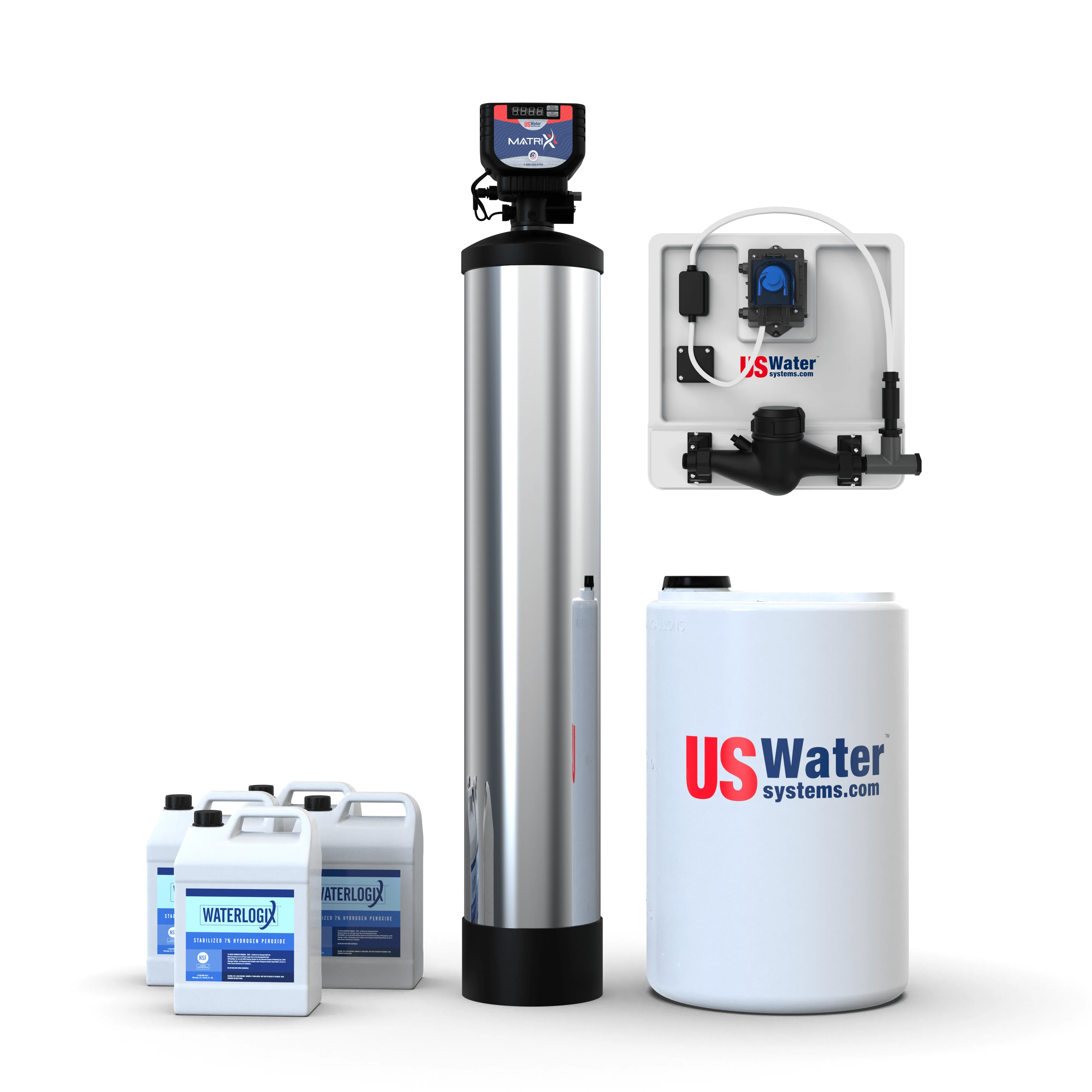
Full guide: Dosing ratios, media compatibility, the disinfection warning, and commissioning — hydrogen peroxide well water treatment →
What happens if you don't treat it
Hydrogen sulfide is corrosive. At high concentrations it attacks copper pipes, brass fittings, and appliances — causing pinhole leaks and premature fixture failure. Beyond the infrastructure damage, the smell permeates laundry, cooking, and makes showering unpleasant. It's worth fixing.
Shocking your well — temporary fix for sulfur bacteria
If sulfur bacteria are the source, shocking the well with chlorine is a temporary fix that kills the bacteria. The smell returns within weeks to months as bacteria repopulate. Shock treatment is useful to confirm bacteria are the source, but permanent treatment requires a filtration system or UV sterilizer to prevent recolonization.
The right fix for your situation
Treatment depends on your H2S concentration and where the smell originates. Use this decision tree:
| Situation | Likely cause | Fix |
|---|---|---|
| Smell in hot water only | Magnesium anode rod reacting with sulfur bacteria | Replace anode rod with aluminum/zinc ($30–$50) |
| Smell in cold and hot, under 1 PPM | Dissolved H2S in groundwater | Catalytic carbon whole-house filter |
| Smell in cold and hot, 1–8 PPM | Moderate H2S from geological sources or sulfur bacteria | Air injection oxidation system (Springwell WF1) |
| Smell comes and goes, slimy deposits | Sulfur bacteria in the well | Shock chlorinate the well, then install UV system |
| Smell in hot water only after water heater service | Sulfur bacteria introduced during service | Flush and disinfect the water heater |
Recommended treatment systems
For H2S up to 8 PPM, the WF1's air injection oxidation is the gold-standard residential fix. No chemicals — oxidizes H2S to sulfur particles and backwashes them away automatically every night.
| H2S removal | Up to 8 PPM |
| Also removes | Iron (7 PPM), manganese (1 PPM) |
| Flow rate | 12–20 GPM |
| Maintenance | Annual media check only |
| Warranty | Lifetime |
Hot water only? Don't buy a whole-house system. Replace the magnesium anode rod in your water heater with an aluminum/zinc rod. It's the actual cause — a $30 fix that a $1,200 filter won't solve.
How to shock chlorinate your well
Shock chlorination kills sulfur bacteria temporarily and is a good first step if the smell is intermittent or you suspect bacterial contamination. It is not a permanent fix — bacteria will return without ongoing treatment.
Steps: (1) Calculate your well volume. (2) Add unscented household bleach — about 1 quart per 100 gallons of well water. (3) Run water until you smell chlorine at every tap. (4) Let sit 12–24 hours. (5) Flush until chlorine smell is gone. (6) Retest for bacteria after 1 week.
If bacteria return within weeks, you need a permanent disinfection system — either continuous chlorination or a UV system installed at the point of entry.
What the sulfur smell actually tells you about your water
Hydrogen sulfide is often a secondary indicator. Its presence can signal:
Sulfur-reducing bacteria: These bacteria consume sulfate and produce H2S as a byproduct. Their presence usually means your well casing has a breach or there's a source of organic material in the aquifer. A positive coliform test alongside H2S is a red flag that warrants professional inspection.
Geological H2S: In some regions — particularly areas with shale, coal, or volcanic rock — H2S occurs naturally in the groundwater. This is stable and consistent, not intermittent, and is treated with filtration rather than disinfection.
Corroding pipes: Old iron or galvanized pipes combined with slightly acidic water can produce sulfur-like odors. Test your pH — below 7.0 is acidic and can accelerate pipe corrosion.