Know your iron level and type before buying anything
Well water iron comes in three forms: ferrous (dissolved, clear water), ferric (particulate, orange water), and iron bacteria (slimy deposits). Each requires a different treatment approach. A $15 test kit or $80 lab test tells you exactly what you're dealing with and how much is present.
Iron levels and what they mean
| 0.3 PPM or less | At or near EPA secondary standard — minor taste/staining issues |
| 0.3–3 PPM | Noticeable staining, taste issues — standard air injection filter handles this |
| 3–7 PPM | Significant staining — air injection filter (Springwell WF1 handles up to 7 PPM) |
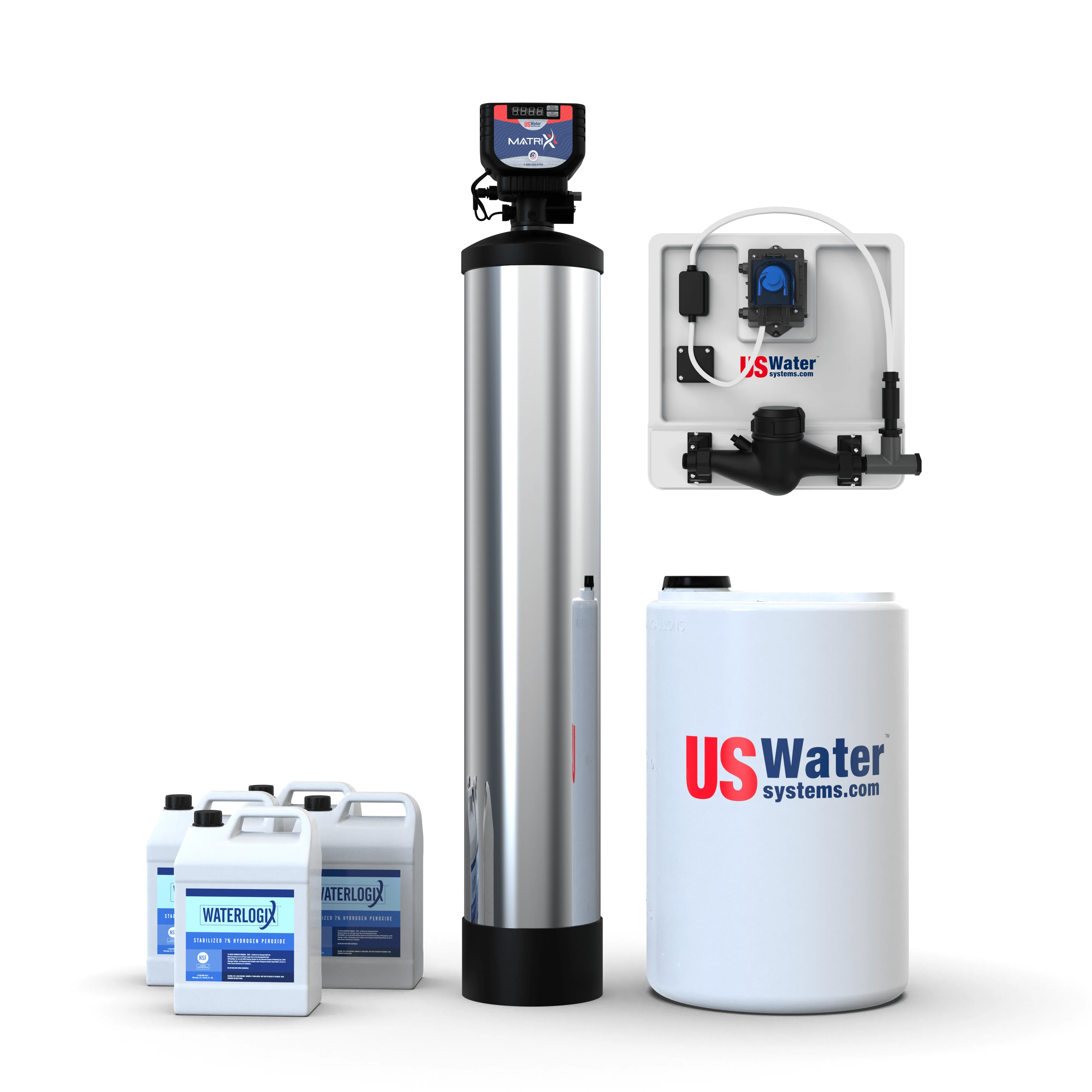
| 7–30 PPM | High iron — needs peroxide injection like the US Water Systems Matrixx InFusion |
| Above 30 PPM | Extreme — chemical oxidation (peroxide injection) likely needed |
Iron filter types — which one do you need?
Air injection oxidation (AIO) — best for most homes
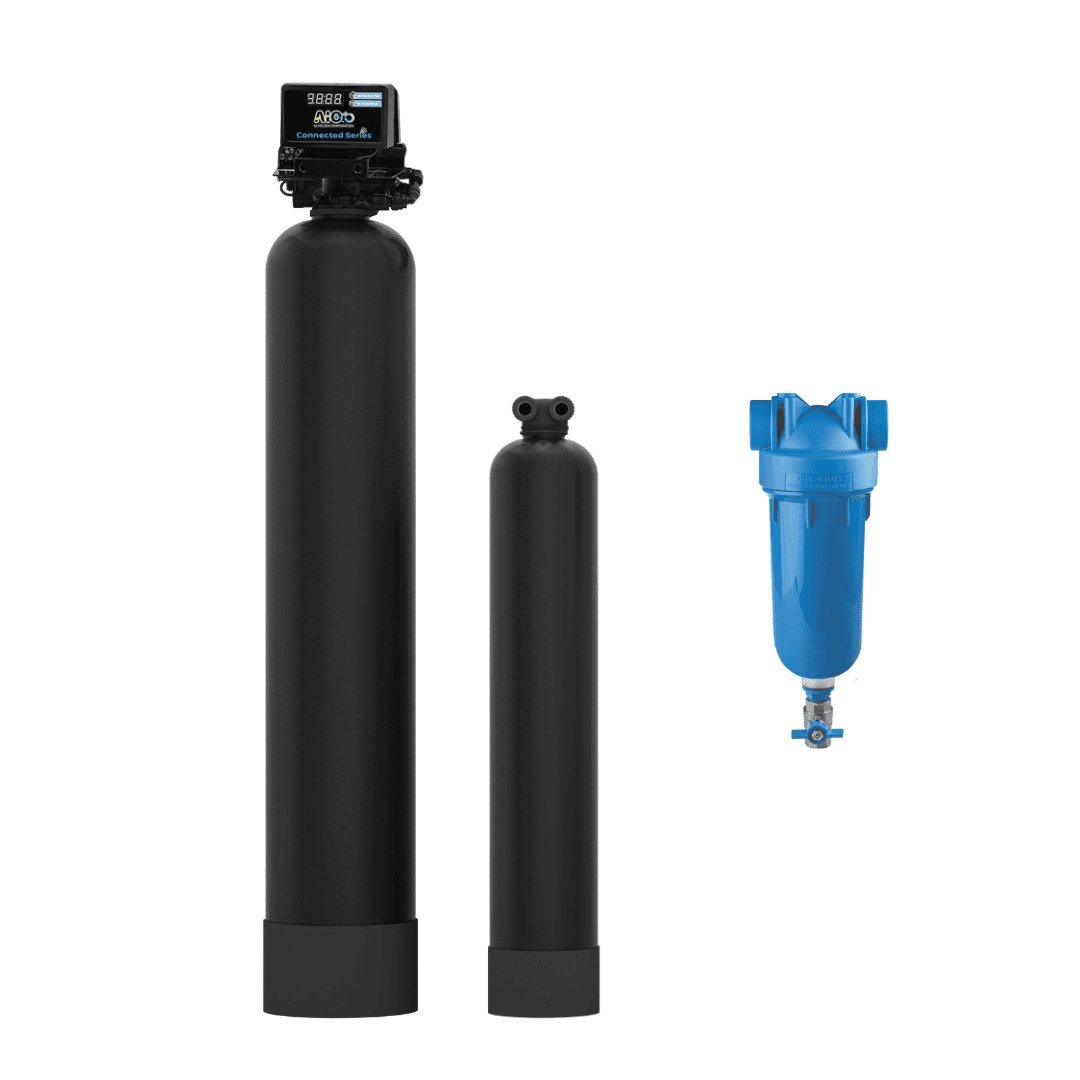
Air injection systems like the Springwell WF1 maintain an air pocket in the filter tank. As water passes through, dissolved iron oxidizes and converts to solid particles that are then filtered out and backwashed away. No chemicals, automatic operation, handles iron + manganese + sulfur in one system.
- Best for: iron up to 7 PPM, manganese up to 1 PPM, hydrogen sulfide up to 8 PPM
- Pros: no chemicals, low maintenance, single tank solution
- Cons: limited by iron concentration — high iron (7+ PPM) may need more powerful system
Greensand filter — established technology
Greensand filters use manganese-dioxide coated media that oxidizes and filters iron, manganese, and hydrogen sulfide. Requires either potassium permanganate regeneration or continuous chlorine injection to recharge the media.
- Best for: consistent iron levels, established well water treatment setups
- Pros: proven technology, handles iron + manganese
- Cons: requires chemical regeneration — ongoing cost and management
Chemical oxidation — for extreme iron
Peroxide (hydrogen peroxide) or chlorine injection systems dose the water before filtration, oxidizing iron at levels that overwhelm air injection systems. More complex, higher operating cost, but handles very high iron concentrations.
- Best for: iron above 7–10 PPM, iron bacteria, combined iron + sulfur problems
- Pros: handles extreme contamination levels
- Cons: ongoing chemical cost, more maintenance, more complex system
Iron filter + water softener — do you need both?
Often yes. An iron filter removes iron but does not soften water (remove hardness). A water softener can remove small amounts of ferrous iron (up to ~3 PPM) but will foul quickly if iron levels are higher.
The correct setup for well water with both iron and hardness: iron filter first → water softener second. The iron filter protects the softener resin from fouling.
Our top picks by iron level
| Under 7 PPM iron | Springwell WF1 — air injection, 12 GPM, lifetime warranty |
| 7–30 PPM iron | Matrixx InFusion — peroxide injection, handles extreme iron |
| Iron + hardness | Springwell WF1 + Fleck 5600SXT in series |
| Iron + sulfur + bacteria | Springwell WF1 + UV system |
Our top picks by iron level
The right iron filter depends on your PPM level, whether you have ferric vs ferrous iron, and if H2S or manganese are co-occurring.
Air injection oxidation is the standard for residential iron removal. The WF1 removes ferrous iron up to 7 PPM, manganese up to 1 PPM, and H2S up to 8 PPM in a single tank — no chemicals, automatic daily backwash. The system most well water professionals recommend.
| Iron removal | Up to 7 PPM ferrous |
| Manganese | Up to 1 PPM |
| H2S | Up to 8 PPM |
| Flow rate | 12–20 GPM |
| Backwash | Automatic (daily) |
| Warranty | Lifetime |
If your iron is under 3 PPM and you also need a water softener, the Fleck 5600SXT with iron-tolerant resin handles both in one unit. Skip the separate iron filter — one system, lower cost, less plumbing.
| Iron removal | Up to 3 PPM ferrous |
| Also removes | Hardness (as a softener) |
| Regeneration | Metered demand |
| Salt use | ~6 lbs/1,000 grains |
| Warranty | 5yr valve / 10yr tank |
| Price | ~$500–$700 |
Ferric (red-water) iron above 5 PPM, or any iron bacteria: Standard air injection may not be sufficient. You may need greensand with chemical oxidation (potassium permanganate) or a Birm filter. Get a detailed water test including iron type before buying any system above $800.
Ferrous vs ferric iron — why the distinction matters
Standard water tests report total iron, but iron exists in two forms that require different treatment approaches:
| Type | Appearance | Best treatment | Notes |
|---|---|---|---|
| Ferrous (clear-water iron) | Water looks clear when drawn, stains appear on standing | Air injection oxidation, ion-exchange softener | Most common in private wells |
| Ferric (red-water iron) | Visibly orange/red when drawn from tap | Sediment filter + air injection or chemical oxidation | Usually from corroding pipes or surface contamination |
| Iron bacteria | Slimy orange deposits, swampy smell | Shock chlorination + UV or continuous chlorination | Biological — filtration alone is insufficient |
Iron filter maintenance — what to expect
Air injection systems (like Springwell WF1): Automatic daily backwash keeps the media clean. Check the air pocket level annually. Media lasts 10+ years. No chemicals to add.
Greensand filters: Require periodic regeneration with potassium permanganate — a purple chemical that must be handled carefully. Media lasts 5–10 years. More maintenance than air injection.
Sediment pre-filters: If you have ferric iron, a sediment pre-filter upstream protects the main iron filter media. Replace the cartridge every 3–6 months depending on iron load.
Signs your iron filter needs attention: Iron staining returning in sinks or tubs, orange tint in water, rotten egg smell increasing (if you also have H2S), or pressure drop across the filter.
Do I need both an iron filter and a water softener?
It depends on your hardness and iron levels:
Under 3 PPM iron + any hardness: A Fleck 5600SXT with iron-tolerant resin handles both. One system, less cost, less maintenance.
3–7 PPM iron + hardness: You need both — an iron filter first (Springwell WF1), then a softener. The iron filter protects the softener resin from fouling.
Iron only, no hardness issue: Iron filter alone is sufficient. Don't add a softener if your water isn't hard — you'd be adding unnecessary salt to your water and ongoing maintenance cost.
Frequently asked questions
What is the best iron filter for well water?
For most homes with 1–7 PPM ferrous iron, the Springwell WF1 is the top choice. Air injection oxidation removes iron without chemicals, handles H2S and manganese simultaneously, and requires minimal maintenance. For under 3 PPM iron where you also need a softener, a Fleck 5600SXT with iron-tolerant resin handles both in one system.
How do I know what type of iron I have in my well water?
A standard iron test tells you total iron. For the type: if water is clear when drawn from the tap but stains appear when it sits (orange rings in toilet bowl, staining on laundry), you have ferrous iron. If the water looks visibly orange or red directly from the tap, you have ferric iron. Slimy orange-brown deposits that smell musty indicate iron bacteria — a biological problem requiring different treatment.
Will a water filter remove iron from well water?
Standard carbon or sediment filters do not remove dissolved (ferrous) iron. You need a filter specifically designed for iron removal — air injection oxidation, greensand, or ion-exchange resin. The type you need depends on your iron concentration and whether it's ferrous, ferric, or bacterial iron.
How long does a well water iron filter last?
Air injection systems like the Springwell WF1 have media that lasts 10+ years. The control valve and tank can last 20 years with proper maintenance. Greensand media typically lasts 5–10 years. The main maintenance requirement is the automatic daily backwash — ensure your drain line is clear and the system is set to backwash at the correct time.
Can iron in well water make you sick?
Iron itself is not a health hazard at the concentrations found in well water — the EPA's secondary maximum contaminant level for iron is 0.3 PPM (purely aesthetic, not health-based). However, high iron can indicate the presence of iron bacteria, which can harbor other pathogens. If you notice slimy orange deposits alongside high iron readings, test for coliform bacteria.