Test your well water first — grain capacity alone doesn't tell the full story
All Harmony Series models use metered demand regeneration — the right choice for well water households that don't want to waste salt on a timer schedule. What you're choosing between is grain capacity. Know your hardness in GPG and your iron level in PPM before ordering.
If iron is above 3 PPM, install a sediment or iron pre-filter upstream regardless of which Aquasure model you choose — high iron fouls resin and shortens the softener's effective life.
Model comparison at a glance
| Model | Capacity | Best for | Tank size |
|---|---|---|---|
| Harmony 32K | 32,000 grains | 1–2 bathrooms, small homes | 8" × 52" |
| Harmony 40K | 40,000 grains | 2–3 bathrooms, moderate hardness | 9" × 55" |
| Harmony 48K | 48,000 grains | 3–4 people, moderate to high hardness | 10" × 62" |
| Harmony 50K | 50,000 grains | 4–5 people or above 20 GPG | 11" × 48" |
| Harmony 64K | 64,000 grains | 5–6 people or above 25 GPG | 15" × 60" |
| SimplySoft 40K | 40,000 grains | IAPMO certified, LCD panel | 30" × 16" × 43" |
How to calculate the right capacity
Daily grains needed = people × 75 gal/person × hardness GPG
Weekly demand = daily grains × 7
Target capacity = weekly demand × 1.5 (so the unit regenerates every 7–10 days)
For iron: add 4 GPG per PPM of clear-water iron to your hardness number before calculating. A 3-person household at 20 GPG needs ~31,500 grains weekly → the 48K gives comfortable headroom.
Aquasure Harmony 50K — Best for Water Savings
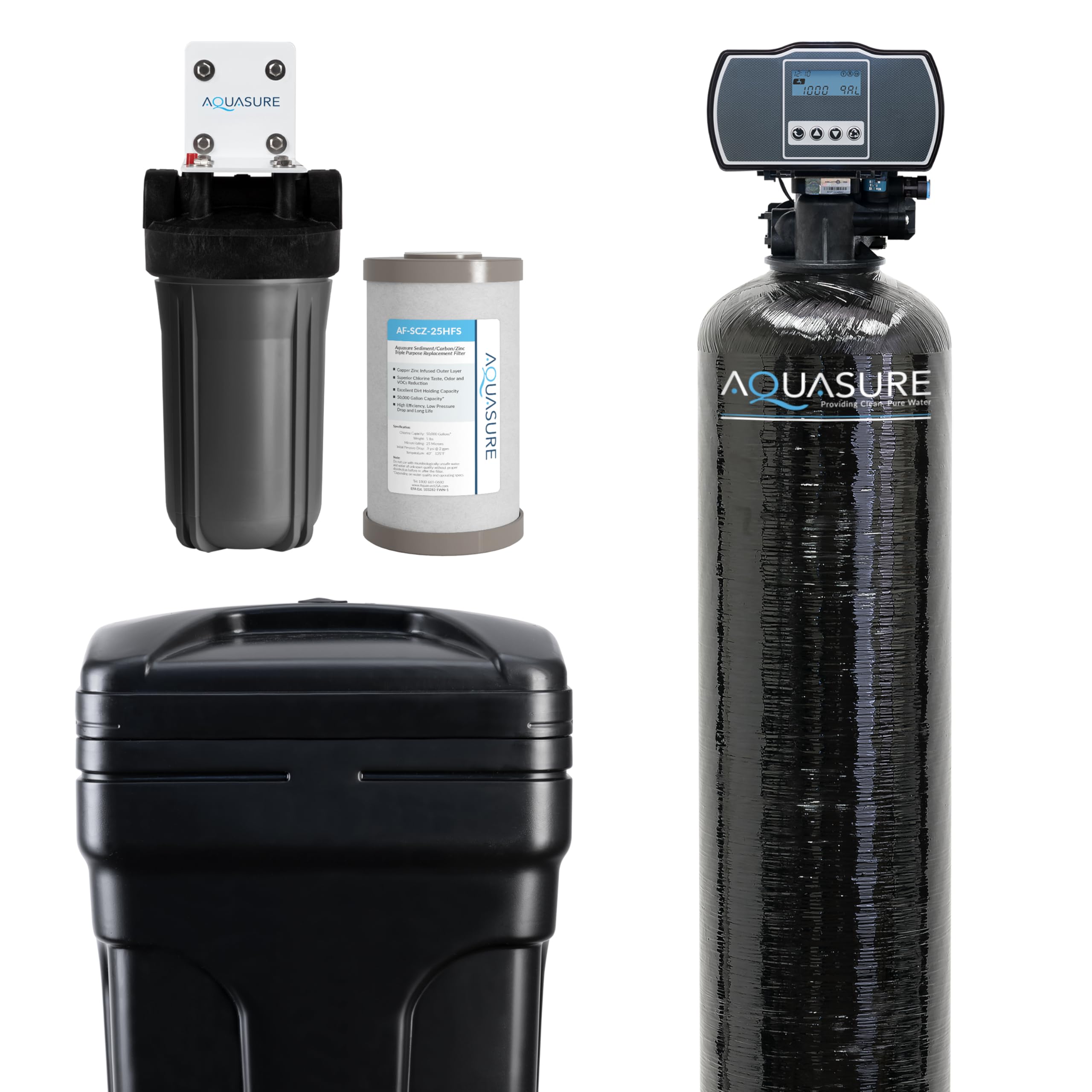
Aquasure Harmony 32K — Best for Small Homes
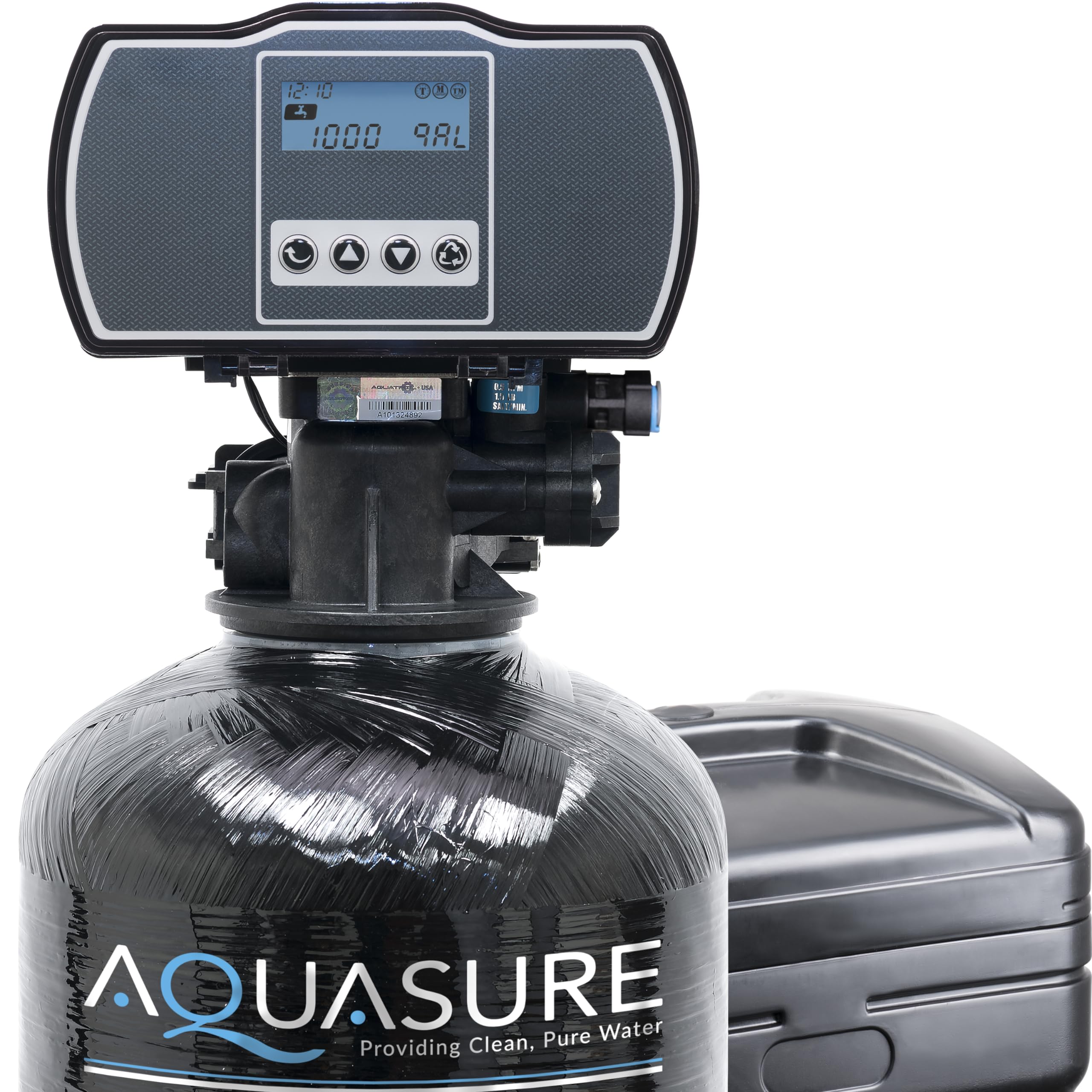
Aquasure Harmony 48K — Best Smart Features
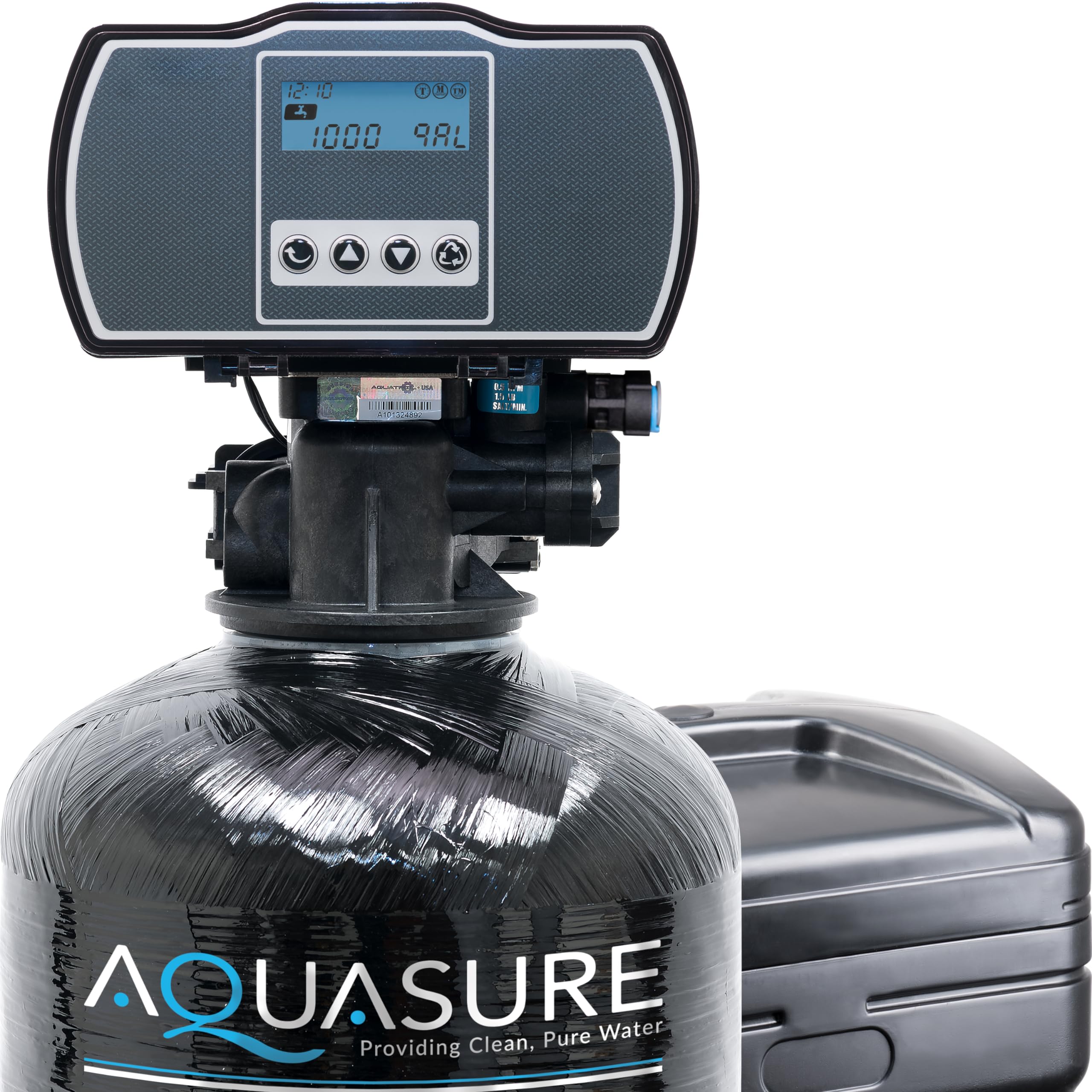
Aquasure Harmony 64K — Best for Large Homes

Aquasure Harmony 40K — Best Value

Aquasana SimplySoft 40K — Most Efficient

Well water considerations for any softener
Iron above 3 PPM needs pre-treatment
Standard softeners handle up to ~3 PPM of clear-water (ferrous) iron before the resin starts fouling. Above that, install a dedicated iron filter upstream of the softener. Without pre-treatment, iron fouls the resin and the softener loses capacity well ahead of its expected lifespan.
No chlorine means resin biofoul risk
City water's chlorine residual passively suppresses bacterial growth in softener resin. Private well water has no chlorine — over time, bacteria can colonize the resin, especially with iron or organic content present. Annual resin cleaning with Iron Out or similar product addresses this for most well water situations.
Use pellet salt, not rock salt
Rock salt contains impurities that accumulate in the brine tank over time. Pellet salt (sodium chloride) dissolves cleanly. If iron is above 1 PPM, use a pellet salt formulated with iron-fighting additives — Morton Rust Remover pellets are the most widely available option.
Common questions
Will an Aquasure softener work with well water?
Yes, but pre-treatment matters. If iron is above 3 PPM, install an iron filter first. If the well has bacterial issues, address those separately — a softener doesn't remove bacteria. For sediment, a pre-filter upstream protects the resin. Well water without pre-treatment where it's needed will foul the resin ahead of schedule.
How do I choose the right Aquasure capacity?
Calculate: people × 75 gal/day × hardness GPG × 7 days = weekly grain demand. Choose a unit with about 1.5× that capacity so it regenerates every 7–10 days. Add 4 GPG per PPM of iron to your hardness before calculating. 1–2 people at 15–20 GPG → 32K. 2–3 people → 40K–48K. 4+ people or above 20 GPG → 50K–64K.
What maintenance does an Aquasure well water softener need?
Top up pellet salt, check for salt bridges every 3–4 months, and for well water with iron, clean the resin annually with Iron Out. The initial resin flush produces discolored water — normal and temporary, clear the first tank before use. Metered regeneration reduces ongoing intervention by firing only when the resin is genuinely depleted.