Use strips to screen. Use a lab to decide.
Home test kits are good at telling you whether you have a problem — orange staining, metallic taste, suspect smell. They're not good at telling you how much of something is present with lab-grade precision, and they don't cover arsenic, PFAS, nitrates, or dozens of contaminants that can be in well water without any taste or color clue.
If you've never tested your well: start with a comprehensive lab test first. If you're doing routine monitoring between annual tests, or want to check whether a new filter is working — these kits are exactly right.
Quick picks
What well water specifically needs in a test kit
Well water has a different contaminant profile than city water. A kit designed for city water testing won't help you — those prioritize chlorine and disinfection byproducts. For a private well, the parameters that matter are:
1. HEVEIS 21in1 — Best Overall for Well Water

HEVEIS 21in1 Home Drinking Water Test Kit
The best-rounded option for a private well owner. Covers all six priority parameters — iron, hardness, pH, lead, bacteria, and nitrates — plus 15 more. Four bacteria tests (not one or two) make it the strongest pick when coliform is a concern. 120 strips support regular monitoring across multiple taps or seasonal checks.
What it covers
Iron, hardness, pH, lead, fluoride, copper, chlorine, nitrates, nitrites, bacteria (4 tests) + 11 additional parameters. 120 multi-parameter strips.
Why for wells specifically: Four bacteria tests included. Iron, hardness, and pH are all on one strip. Suitable for tap and well water — not adapted from a city water kit.
Check Price on Amazon →2. Detekt Total — Most Accurate (Near-Lab Result)
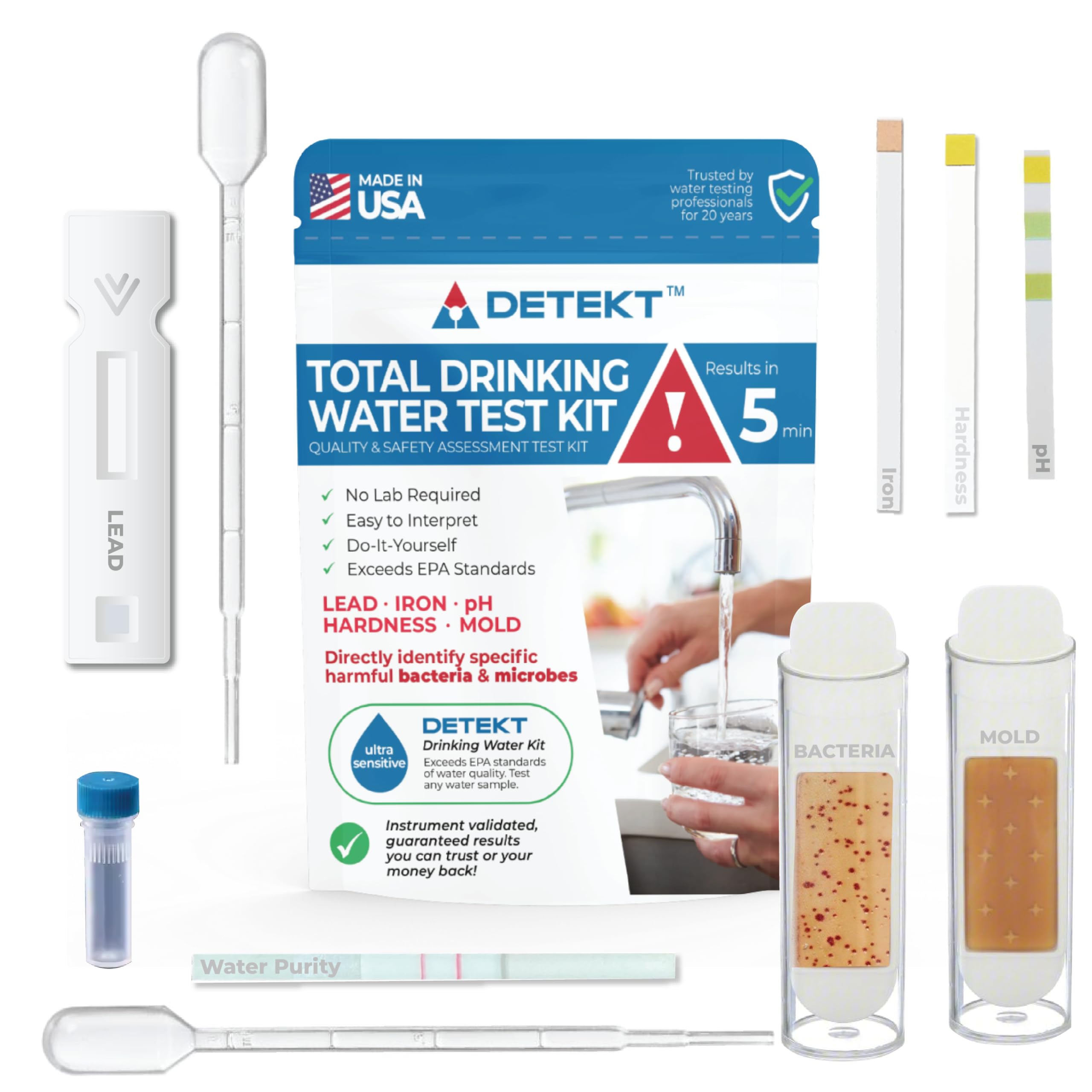
Detekt Total Drinking Water Test Kit (Made in USA)
The closest thing to lab accuracy you'll get in an at-home kit. Made in the US, covers lead, bacteria, mold, heavy metals, pH, and hardness. Gets the highest accuracy ratings in user testing. When you've had a concerning strip result and want near-confirmation before calling the lab — this is the follow-up kit.
What it covers
Lead, bacteria, mold, heavy metals, pH, hardness. Made in USA. Higher accuracy threshold than standard strips.
Limitation: Fewer strips than the volume kits — this is a precision kit, not a routine monitoring kit. Pair with a high-count strip kit for day-to-day checks.
Check Price on Amazon →3. VARIFY 17in1 — Best Value, Broad Coverage
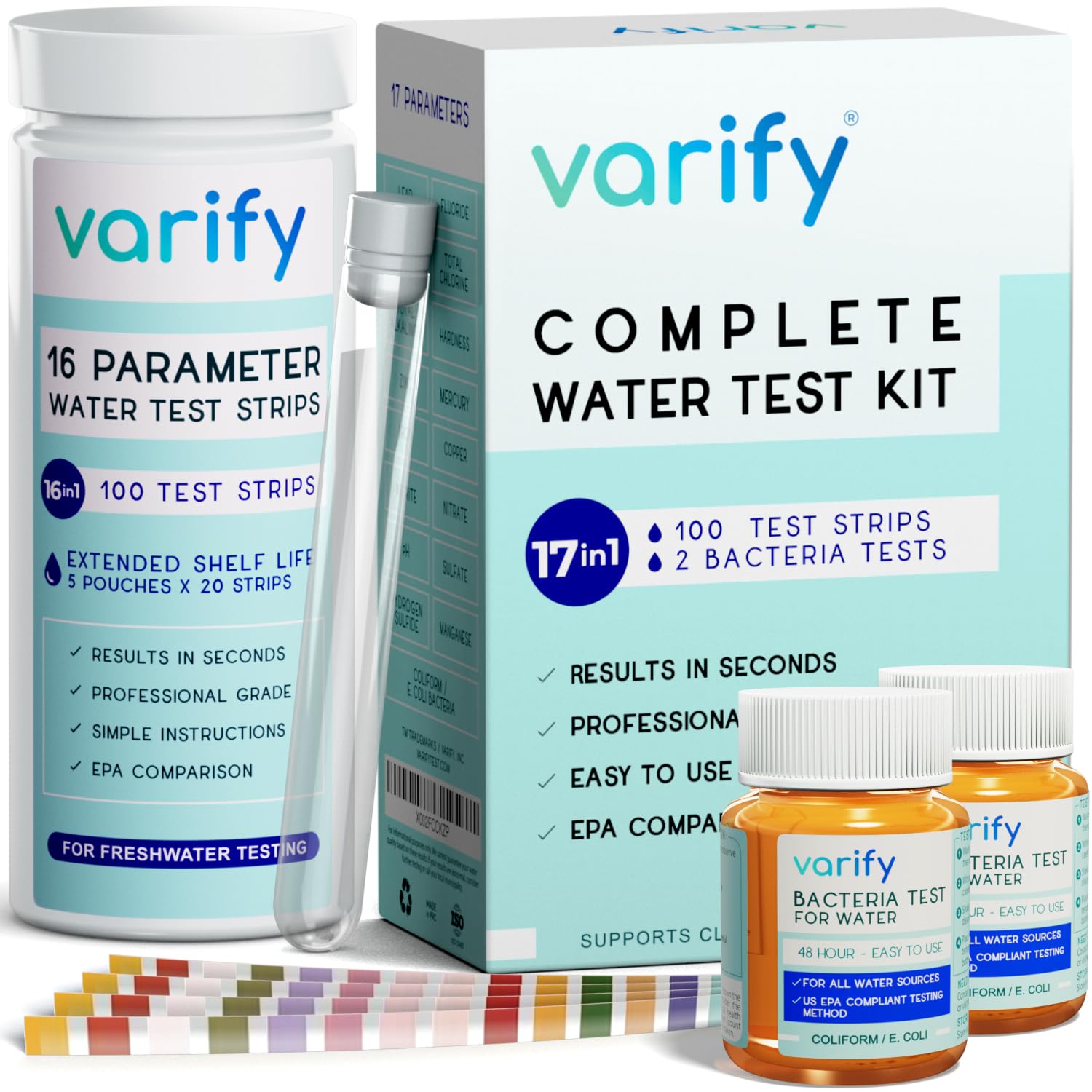
VARIFY 17in1 Complete Drinking Water Test Kit
100 strips plus 2 bacteria tests at a competitive price point. Covers lead, pH, hardness, chlorine, iron, fluoride, and copper — all 17 parameters well water owners care most about. Good for initial baseline testing across multiple taps, and for regular pre-softener and post-filter comparisons.
What it covers
Lead, pH, hardness, chlorine, iron, fluoride, copper + 10 additional parameters. 100 strips + 2 bacteria kits.
Well water use case: Comparing filtered vs. unfiltered tap to confirm a new iron filter is working. Running a baseline before buying a softener. Seasonal spot-checks between annual lab tests.
Check Price on Amazon →4. TESPERT 16in1 — Fastest Results
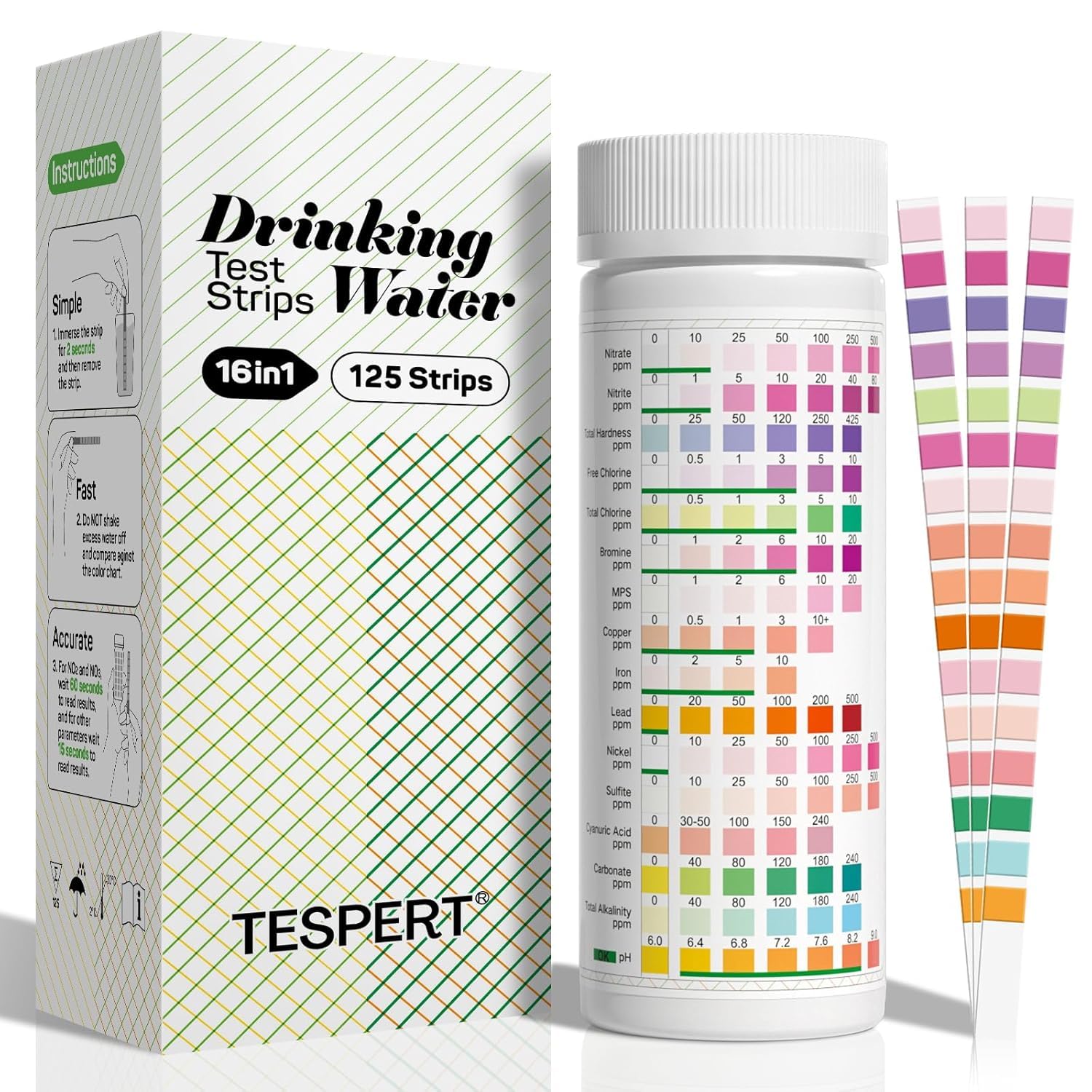
TESPERT 16in1 Drinking Water Test Strips
30-second results on 16 parameters including hardness, pH, iron, nitrite, copper, chlorine, and lead. 125 strips. No bacteria tests — these are pure strip screening. The clear color chart and fast turnaround make these the right choice when you want a quick check before calling a plumber or ordering equipment.
What it covers
Hardness, pH, iron, nitrite, copper, chlorine, lead, alkalinity + 8 additional. 125 strips. 30-second results.
No bacteria tests included. If bacteria is a concern, choose HEVEIS or HYCHEK instead. For iron and hardness screening — fast and well-priced.
Check Price on Amazon →5. AESCULIX 23in1 — Best for Ongoing Well Monitoring
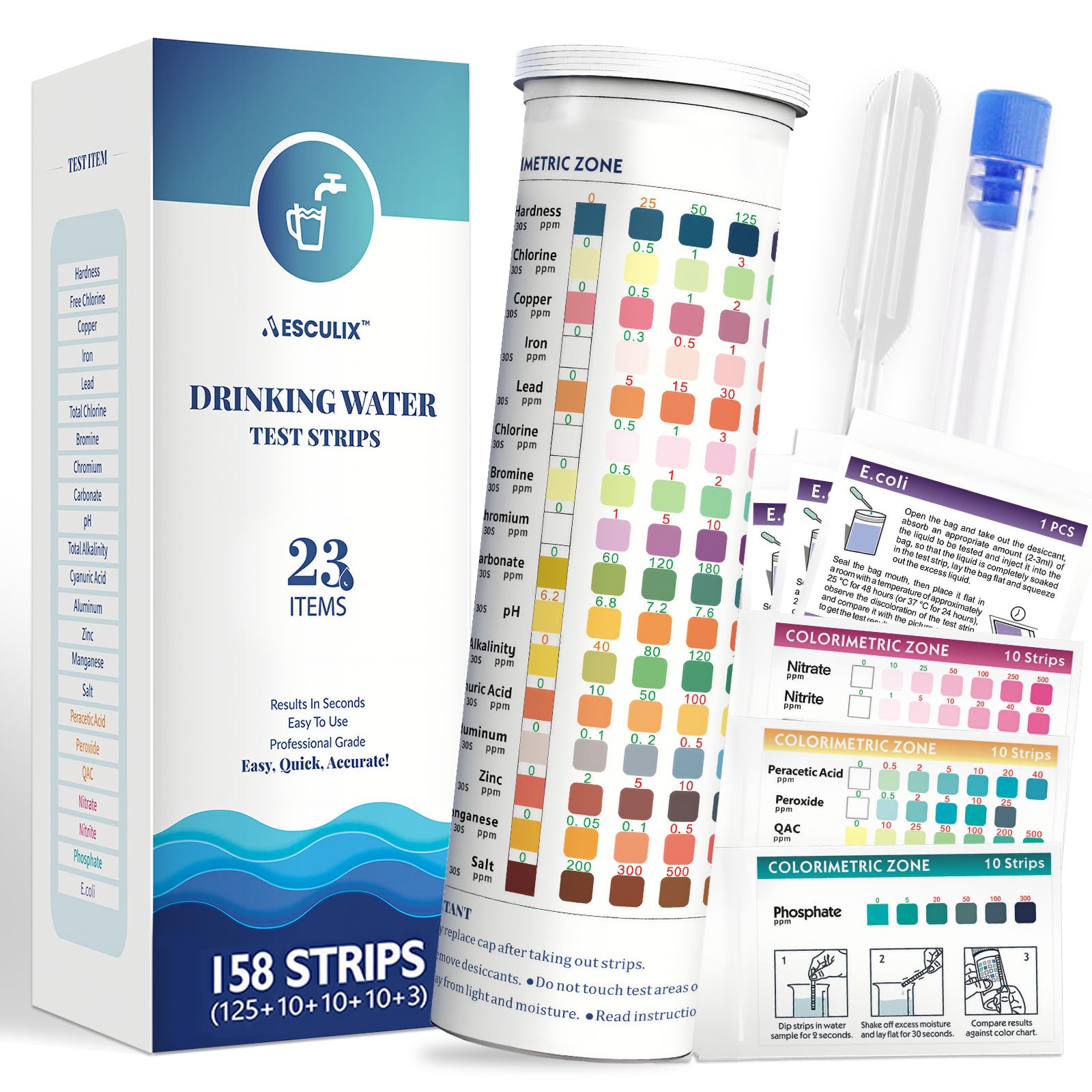
AESCULIX 23in1 Drinking Water Test Kit
158 strips across 23 parameters — the largest supply in this roundup. Best for well owners who test frequently: monthly monitoring between annual lab tests, before and after softener or filter changes, or multiple taps in a larger home. No bacteria tests, but the parameter coverage and strip volume make it a strong ongoing monitoring kit.
What it covers
Hardness, chlorine, copper, iron, lead, pH + 17 additional. 158 strips. Includes test tubes and droppers.
6. HYCHEK 21in1 — Best for Lead + Bacteria Together
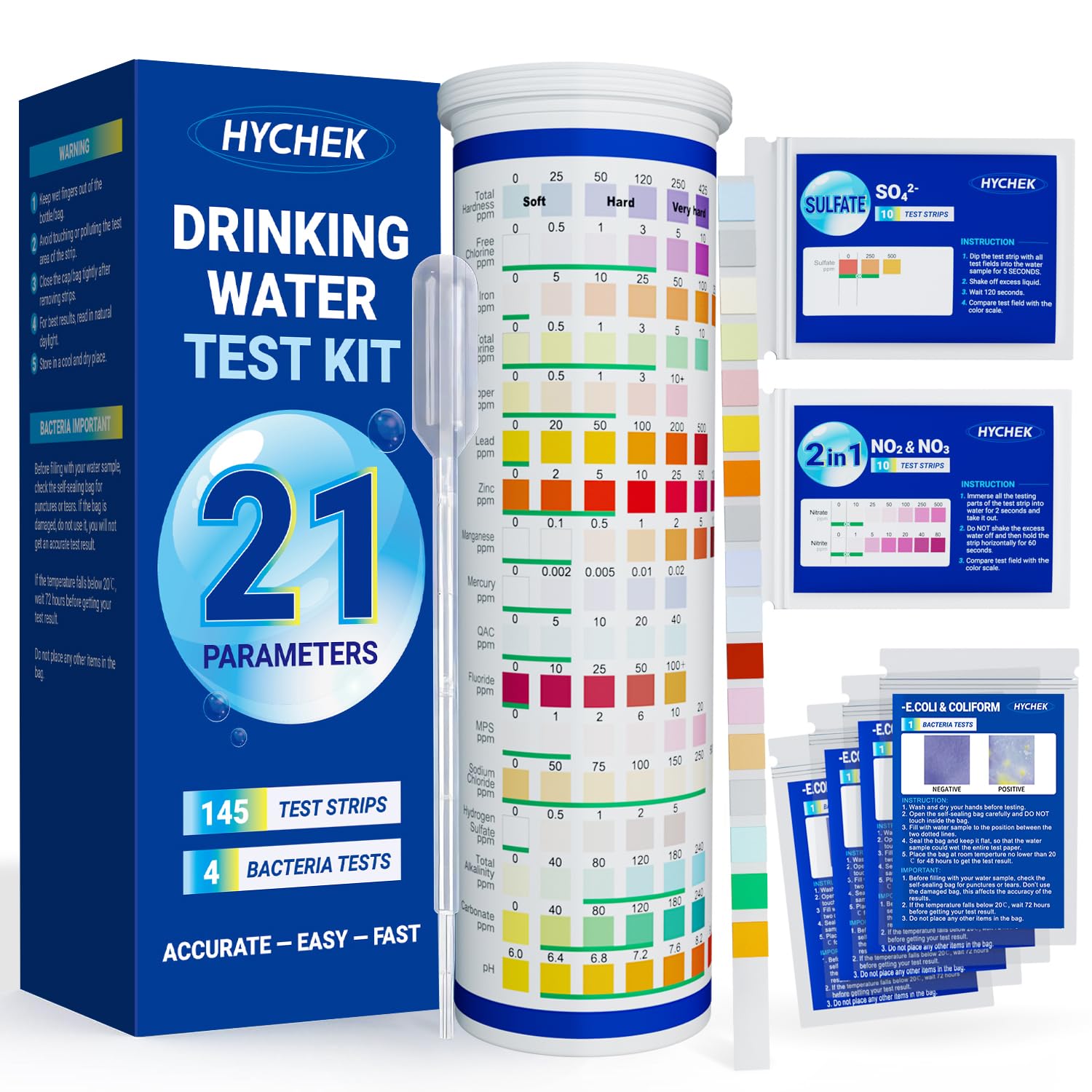
HYCHEK 21in1 Drinking Water Test Kit
145 strips plus 4 bacteria tests. Covers lead, fluoride, chlorine, hardness, pH, iron, copper. Good option for older wells where lead from solder joints or well casings is a concern alongside bacteria. High strip count supports regular monitoring. Clear, straightforward format.
What it covers
Lead, fluoride, chlorine, hardness, pH, iron, copper + 14 additional. 145 strips + 4 bacteria tests.
7. Safe Home 14in1 — Best Lead-Specific Kit

Safe Home 14in1 DIY Drinking Water Test Kit
Dedicated lead and bacteria tests plus 12 additional parameters. Safe Home is a well-known brand in home water testing. Good for older homes with pre-1986 plumbing where lead solder is a realistic concern, or for a newly drilled well where you want bacteria and lead ruled out before regular use. Clear step-by-step instructions designed for first-time testers.
What it covers
Lead (dedicated test), bacteria, hardness, pH, chlorine + 9 additional. Includes testing components and instruction guide.
Note: Lower strip count than the volume kits — better suited for one-time baseline checks than ongoing monitoring.
Check Price on Amazon →How to get accurate results from home test strips
Most inaccurate results come from poor sampling technique, not bad strips. Follow these steps:
Run the tap for 2 minutes before collecting the sample
Flushes standing water from pipes, which may have different mineral content than your actual well water.
Remove the faucet aerator before testing if checking for iron
Aerators trap iron particles and can falsely elevate readings at the tap compared to the main supply.
Dip for exactly the time specified on the package
Under-dipping reduces reagent contact. Over-dipping washes reagent off the pad. Most strips are 1–2 seconds.
Read in good natural light — not under a yellow incandescent bulb
Color matching is harder under warm artificial light. Daylight or daylight-spectrum LED gives the most accurate read.
Read within the exact window specified — not after
Strips continue to react after the reading window. A strip read at 2 minutes may show different (inaccurate) results than one read at 30 seconds as specified.
Photograph the strip next to the chart
Useful for comparing results across tests and for sharing with a water treatment professional if you need advice on what system to install.
Use a certified lab test in these situations
A lab test is necessary — not optional — when: you've never tested this well before, a home strip shows a positive bacteria result, you're installing a $1,000+ filtration system and need accurate PPM readings to spec the system correctly, you have infants under 1 year or pregnant household members, or you want to test for arsenic, nitrates, PFAS, or radon (none of which home strips cover reliably).
Our recommended lab test: Tap Score Well Explore (~$149) — covers 100+ parameters, accredited lab, results in 5–7 days with a clear action guide.
Common questions
Are home water test kits accurate enough for well water?
For screening — yes. They'll tell you whether iron is above 0.3 PPM, hardness is over 7 GPG, or bacteria indicators are present. They won't give you a precise 2.4 PPM iron reading or detect arsenic, PFAS, or most heavy metals. Use strips to narrow down what problems you have, then confirm with a lab test before making major equipment purchases.
What should I test for in a private well?
At minimum: hardness, iron, pH, and coliform bacteria. These cover the four most common private well problems. Add sulfur if you have rotten egg smell, nitrates if you're near agricultural land, and lead if the house was built before 1986. See our well water testing guide for the full breakdown.
A home bacteria test came back positive — what do I do?
Don't drink the water. Switch to bottled water immediately. Schedule a certified lab coliform test (your county health department often offers these free or low-cost). If confirmed positive, shock-chlorinate the well — this is a standard treatment for bacterial contamination. See our coliform treatment guide for the full procedure. Retest 10 days after treatment.
How often should I test my well water?
At minimum, a comprehensive lab test once a year. More often after: floods or heavy rainfall (surface infiltration risk), nearby construction or drilling, a change in taste, smell, or color, or if anyone in the household gets sick with unexplained GI symptoms. Home strip kits are useful for monthly monitoring between annual lab tests.
Related guides
- Well water testing guide — what to test for and how to do it
- Tap Score well water test review — is the $149 kit worth it?
- Well water iron test — how to test and what results mean
- Coliform in well water — what to do after a positive test
- Well water hardness — understanding your GPG reading
- Best well water filter system — top picks once you know what's in your water