Test your water — treatment selection without it is guesswork
Hydrogen sulfide at 0.3 PPM needs a different system than H2S at 4 PPM. A carbon filter rated for low-level H2S will be overwhelmed and rapidly exhausted at higher concentrations. Request a specific H2S concentration test from a state-certified lab — it's not included in most standard panels. Also test for iron, pH, and bacteria.
The Springwell WF1 installation manual explicitly states: do not install on well water without speaking to a customer service representative first — because well water chemistry determines whether upstream pretreatment is needed before any carbon or oxidation filter will work as intended.
Step 1: Diagnose your sulfur problem before treating it
Three different problems can produce rotten egg smell — and each needs a different treatment. The quickest diagnosis takes 5 minutes at your taps.
Test 1: Hot water vs cold water
Test 2: Check the toilet tank
Lift the toilet tank lid and look at the walls and water surface. This is the single fastest way to detect iron and sulfur bacteria.
Rusty, reddish-orange or brownish slime on tank walls
Iron bacteria. May co-occur with sulfur smell. Odor will be swampy, oily, or musty — not rotten egg. Treat with shock chlorination first.
Rainbow-colored oily sheen on water surface
Classic iron bacteria signature. Common in wells with dissolved iron above 0.01 PPM — essentially any iron-bearing groundwater.
Black or dark grey sludge in pipes or fixtures
Sulfur bacteria plus iron sulfide formation. Rotten egg smell present. Shock chlorinate; may need continuous treatment.
Clean tank, odor only
Dissolved H2S from geological source in the aquifer — no bacteria slime present. Filter selection based on concentration.
A clean bacteria test doesn't mean you don't have bacteria
Standard water tests detect coliform and E. coli — bacteria that indicate fecal contamination and pose health risks. Iron bacteria and sulfur bacteria are completely different organisms that produce odor, staining, and equipment damage but no health risk — and they're not detected by standard tests.
According to UGA Extension research, bacterial slime can clog an entire well system and render it useless in months under favorable conditions. A clear coliform test result does not rule this out. If you see any slime in the toilet tank, request a specific iron/sulfur bacteria test from your lab.
Step 2: Match your filter to your H2S concentration
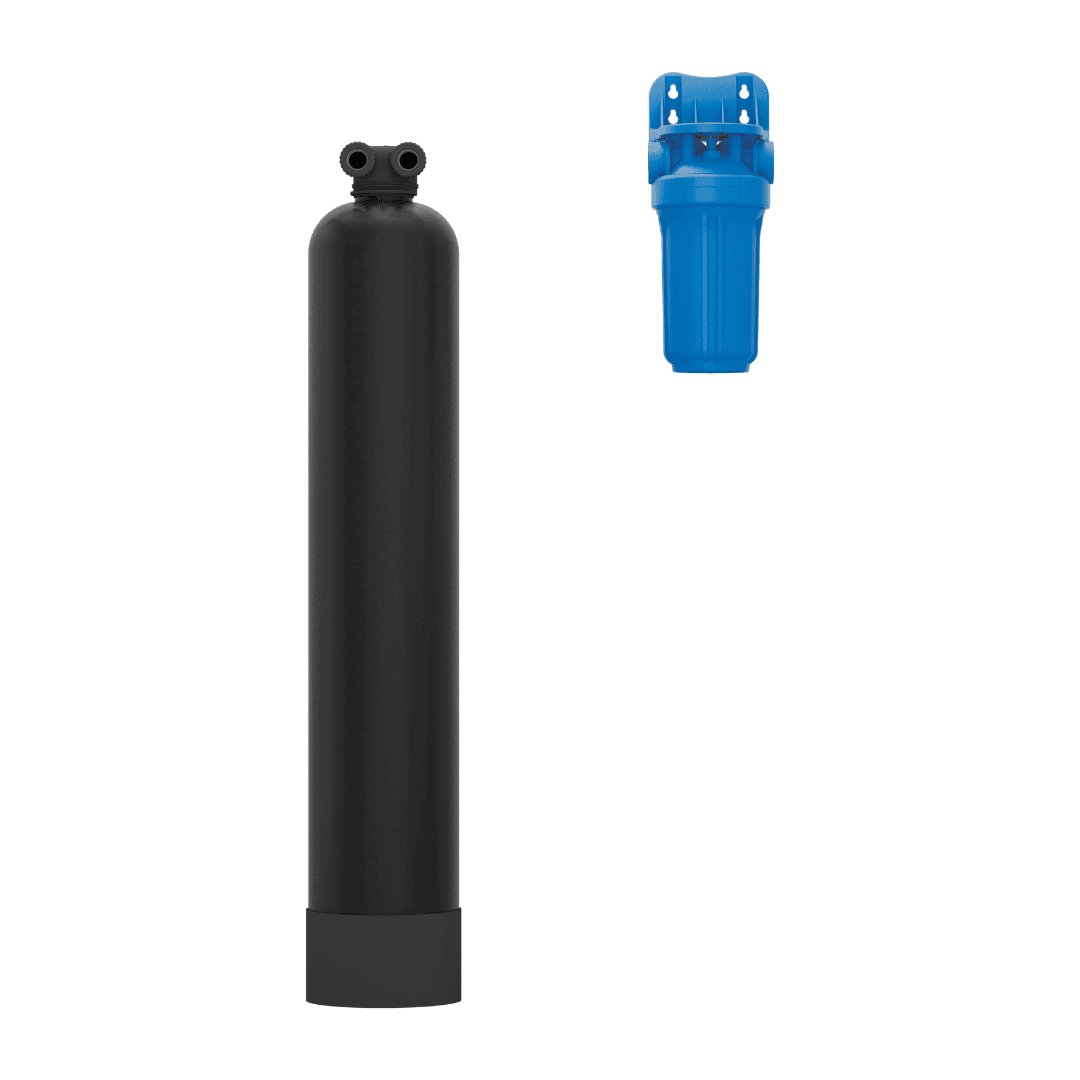
Catalytic carbon whole-house filter
At trace-to-low H2S levels, catalytic carbon outperforms standard GAC significantly. Catalytic carbon oxidizes H2S on the carbon surface rather than simply adsorbing it — it handles chloramines too, which standard carbon doesn't. The Springwell CF1 uses catalytic carbon with KDF media. Media life is rated at 1 million gallons / 6 years.
Important: Standard activated carbon alone is only effective below 0.3 PPM — if your H2S is above this, catalytic carbon or a dedicated H2S system is required. Do not rely on a standard whole-house GAC filter for meaningful sulfur removal.
Springwell CF1 review →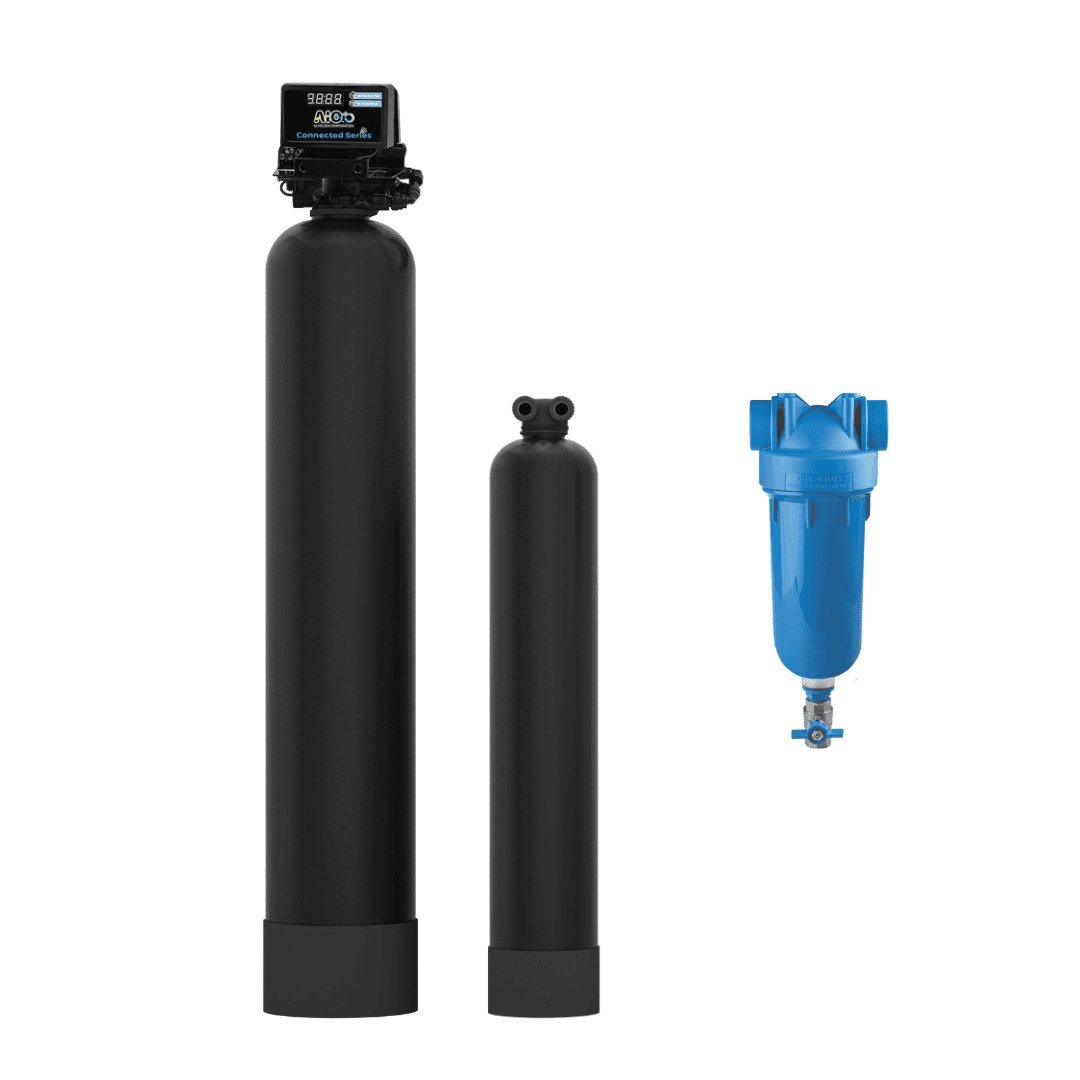
Air injection oxidation — Springwell WF1
The majority of well water sulfur complaints fall in the 1–8 PPM range — strong enough to be intolerable but within the range of air injection oxidation. The WF1 maintains a pocket of compressed air at the top of the tank that oxidizes dissolved H2S (and iron) on contact, converting them to solid particles that backwash to drain. Chemical-free, no media replacement. Also removes iron up to 7 PPM and manganese up to 1 PPM simultaneously.
Note on bacteria: If sulfur bacteria are confirmed in your well, the WF1 addresses the H2S they produce but does not kill the bacteria themselves. Shock chlorinate the well first, then install the WF1 to handle ongoing dissolved H2S and prevent odor recurrence.
Shock chlorination + continuous chlorination + backwashing filter
When H2S is above 2 PPM and bacteria are confirmed (repeated odor after shock chlorination, slime in toilet tanks), an oxidizing filter alone is not the long-term answer. Continuous chlorination — a chemical feed pump injecting measured chlorine into the supply line ahead of a retention tank — oxidizes H2S continuously and controls bacterial growth. A downstream backwashing filter removes the oxidized sulfur particles; a final carbon stage polishes any residual chlorine taste.
Per Penn State Extension: chlorination systems require significant maintenance — monthly chlorine solution tank refills, filter backwash, and periodic carbon replacement. This is the most maintenance-intensive treatment option but the most effective for persistent bacterial sulfur problems.
Cost range: $1,500–$3,500 installed. Best suited for high H2S or bacterial problems that have repeatedly returned after shock chlorination.
Above 5 PPM H2S — get professional assessment
At concentrations above 5 PPM, multi-stage treatment is required — typically continuous chlorination plus a manganese greensand filter plus carbon polishing. Possibly a new well if the geological source is severe. At very high concentrations in enclosed, poorly ventilated spaces, H2S can cause dizziness during extended exposure. Do not attempt DIY-only treatment at this level.
Hot water only? This $25 fix solves it
If the rotten egg smell is only present in hot water and not cold, the well is almost certainly not the problem. Most water heaters contain a magnesium sacrificial anode rod that protects the tank from corrosion. Magnesium reacts with sulfates in the water to produce hydrogen sulfide gas inside the hot water tank — the warm, low-oxygen environment accelerates this reaction.
The fix: replace the magnesium anode rod with aluminum or zinc
Cost: $20–$80 for the rod. DIY-installable on most water heaters with a socket wrench — no plumber needed. After replacement, flush the tank to remove accumulated H2S gas.
Temperature note: If your water heater is set above 150°F, use only an aluminum rod — zinc rods are not suitable at high temperatures.
This fix is specific to the hot-water-only scenario. If smell is present in both hot and cold water, you need whole-house treatment regardless of the anode rod.
All treatment options compared
Why standard carbon filters often fail for sulfur
Standard granular activated carbon (GAC) is only reliably effective for H2S below approximately 0.3 PPM — the threshold where you might barely notice a smell. Above that, standard carbon exhausts quickly and the sulfur smell returns within weeks.
Catalytic carbon is more effective — it converts H2S to elemental sulfur on the carbon surface through catalytic oxidation rather than simple adsorption, which is a more efficient use of media capacity. The Springwell CF1 uses catalytic carbon and handles low-level H2S reasonably well. But catalytic carbon still has an upper limit around 1 PPM for reliable whole-house treatment.
Above 1 PPM, oxidation — either through air injection (WF1) or chemical oxidation (chlorination) — is the only reliable approach. An additional risk: carbon filter beds that aren't managed correctly can actually harbor sulfate-reducing bacteria, potentially worsening odor problems over time.
Shock chlorination — the necessary first step when bacteria are involved
If your diagnostic points to bacteria (slime in toilet tank, odor that's worse after non-use, odor returning repeatedly after treatments), shock chlorinating the well should happen before you install any whole-house filter. Carbon filters and air injection systems do not kill bacteria — they address the H2S those bacteria produce, but the biological source remains active.
Basic shock chlorination (DIY, $10–$50)
Add 1/2 gallon of household bleach for shallow wells (under 40 ft) or 1 gallon for deep wells (over 40 ft). Circulate through the system. Let sit for several hours, then flush. Most effective at pH 5–7 — less effective in alkaline water above pH 7.5.
Limitation: shock chlorination is not a permanent solution
Bacteria can recolonize the well system within weeks to months. If odor returns within a few weeks of shock chlorination, the bacteria are firmly established — continuous chlorination equipment is the long-term answer, not repeated shock treatments. Per Penn State Extension: install a continuous treatment device when shock chlorination provides insufficient duration of benefit.
Protect your softener during shock chlorination
Chlorine above 2 PPM damages softener resin. Bypass any water softener and whole-house carbon filter during shock chlorination, and run several regenerations after the chlorine has fully flushed from the system before putting them back in service.
Testing schedule for wells with sulfur
Common questions
My water test came back clean — why does it still smell?
Standard tests detect coliform and E. coli — bacteria associated with fecal contamination. Iron and sulfur bacteria are completely different organisms not included in standard panels. A clean bacteria test says nothing about nuisance bacteria. Additionally, hydrogen sulfide has no EPA maximum contaminant level and isn't in most standard panels unless you specifically request it. Order a dedicated H2S concentration test.
Is hydrogen sulfide in my water dangerous?
At concentrations found in typical wells (0.5–5 PPM), H2S is classified as a nuisance contaminant, not a health threat. The University of Nebraska Water Program states it does not pose serious health risks under normal household conditions. The main problems are corrosion of copper and brass plumbing, black staining on silverware, and the intolerable odor. At extremely high concentrations in very enclosed, poorly ventilated spaces H2S can cause dizziness, but this is not a realistic scenario in a normally ventilated home.
Why does my water smell worse in the morning?
H2S produced by sulfur bacteria (or released from the aquifer) accumulates in the standing water in your pipes overnight. The first water drawn in the morning carries the highest concentration of dissolved gas. According to UGA Extension, this timing pattern is a strong diagnostic signal for either bacterial activity or geological H2S that concentrates when water is stagnant. If it improves after running the tap for a few minutes, the source is in the pipes/well rather than the aquifer actively feeding into the house.
Will a water softener fix sulfur smell?
No. A conventional salt-based softener won't reliably remove H2S and may actually be harmed by it — sulfide ions can poison softener resin over time, reducing its hardness removal capacity. For H2S, dedicated treatment (catalytic carbon, air injection, or chlorination) is required. If you also have hardness, install the H2S system upstream of the softener so sulfur doesn't reach the resin.
Can I shock chlorinate the well myself?
Basic shock chlorination is a documented DIY procedure available from Penn State Extension and most state health departments. However, it's not a permanent fix — bacteria recolonize within weeks to months in most cases. It's also less effective in alkaline water (pH above 7.5), and heavy iron biofouling may require professional well casing pre-treatment before chlorine can penetrate the biofilm. For recurring bacterial problems, professional evaluation and continuous chlorination equipment is the correct long-term answer.
Related guides
- Well water smells like sulfur — complete guide
- Hydrogen sulfide water filter — all options
- Springwell WF1 review — best air injection filter
- Best iron and sulfur filter for well water
- Iron bacteria in well water — what to do
- Well water testing guide — how to test for H2S and bacteria
- Coliform in well water — treatment after a positive test