Affiliate links — we earn a commission at no extra cost to you.
The WS-6000 is the best-configured salt-free whole house system for well water — sediment pre-filter, KDF/carbon filtration, and TAC conditioning in one complete package. No salt, no brine, no regeneration, no electricity. The WS-6000UV adds UV sterilization for well water with bacterial concerns. The one hard limit: iron must be below 0.3 PPM or the TAC media fouls. Test your water before buying.
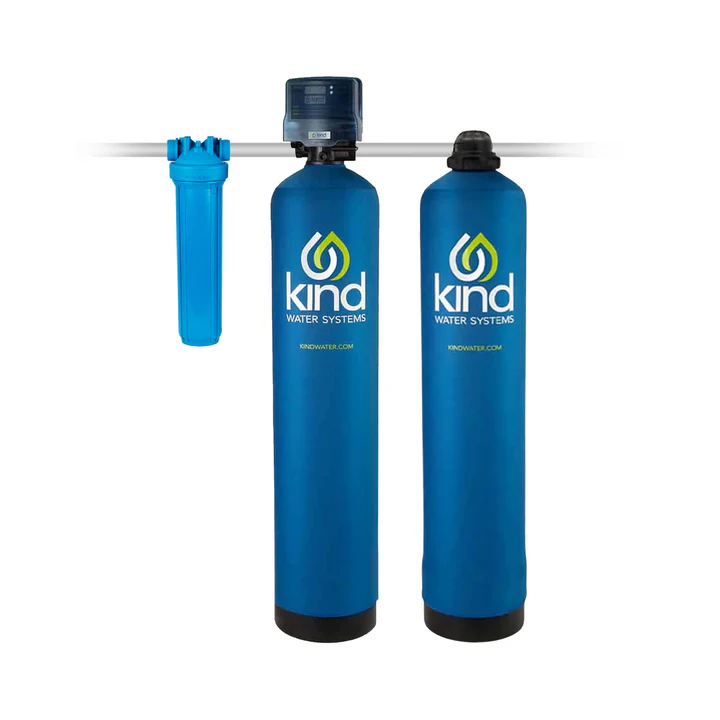
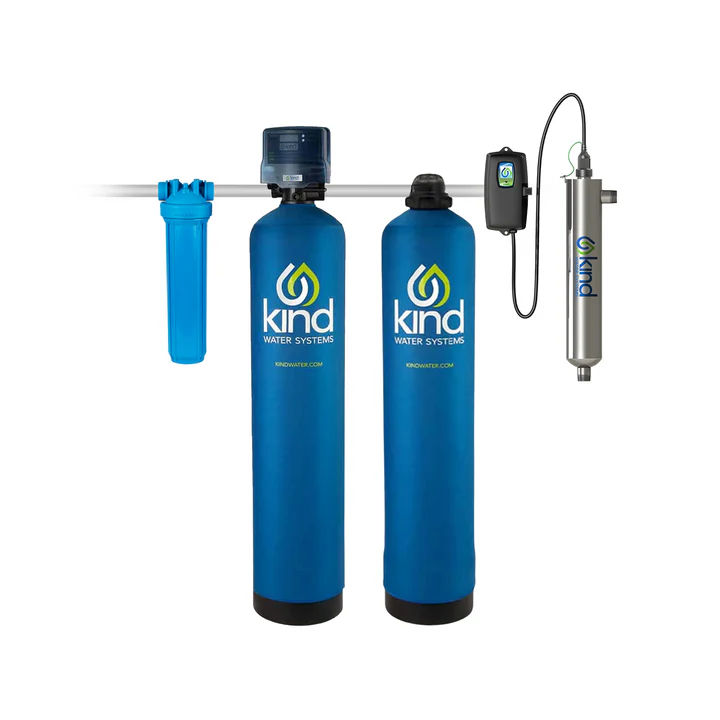
What's in the system
① Sediment pre-filter (blue housing)
5-micron cartridge removes sand, silt, and rust before water enters the main tanks. Essential for well water. Replace every 3–6 months depending on sediment load.
② Whole house filter tank (KDF + carbon)
Removes hydrogen sulfide at low concentrations, heavy metals, VOCs, and trace organics. On well water, this stage handles H2S and chemical contamination the sediment filter passes. Rated 1 million gallons.
③ TAC salt-free conditioning tank
Converts dissolved calcium and magnesium into crystals that cannot bond to surfaces. Hardness minerals stay in the water but cannot form scale on water heaters, fixtures, or pipes. No salt, no regeneration, no electricity. Rated 1 million gallons (~10 years).
④ UV sterilization (WS-6000UV only)
254nm UV lamp eliminates 99.99% of bacteria, viruses, Giardia, and Cryptosporidium. Installed after the filtration and conditioning tanks so water is clear before UV exposure. Annual lamp replacement (~$50–80). Critical for any well with a history of coliform or bacterial contamination.
The iron limit — most important factor for well water
⚠ Test iron before buying
TAC media is sensitive to iron. Above 0.3 PPM ferrous iron, iron will coat the conditioning sites and reduce scale prevention effectiveness. Dedicated iron removal upstream is required for iron above 0.3 PPM.
This is the most common complaint about salt-free TAC systems — well water buyers with iron install without pre-treatment and the system loses effectiveness within months. Get a water test before buying. If iron is above 0.3 PPM, add an iron filter upstream, or use a traditional salt-based softener that handles both iron and hardness.
TAC vs traditional salt softener — key differences
| Salt softener | Kind Water WS-6000 (TAC) | |
|---|---|---|
| Prevents scale | ✓ Yes | ✓ Yes |
| Removes hardness minerals | ✓ Yes | ✗ No |
| Salt required | ✗ Ongoing | ✓ None |
| Brine discharge | ✗ Yes — septic risk | ✓ None |
| Electricity | ✗ Yes | ✓ None |
| Septic-safe | ✗ Debated | ✓ Yes |
| Media lifespan | Resin 10–15 yrs | 1 million gal (~10 yrs) |
WS-6000 vs WS-6000UV — which to buy
The UV upgrade adds $879 to the purchase price. It's worth it in two situations:
- Your well has ever tested positive for coliform, E. coli, or other bacterial contamination
- Your well is shallow, near agricultural runoff, or in an area with known bacterial contamination risk
- You have immunocompromised household members for whom bacterial risk is serious
If your well consistently tests clean on bacteria and coliform, the standard WS-6000 is sufficient. UV is maintenance — the lamp requires annual replacement at ~$50–80/year. On the WS-6000UV that cost is ongoing; skip it if you don't need it.
Specifications
| WS-6000 price | $2,343.52 (17% off) |
| WS-6000UV price | $3,222.33 (17% off) |
| Technology | TAC (Template Assisted Crystallization) |
| Iron tolerance | 0.3 PPM ferrous iron maximum |
| Media lifespan | 1 million gallons (~10 years) |
| Sediment pre-filter | 5 micron, replace every 3–6 months |
| Salt / brine | None |
| Electricity | None (UV model requires outlet for lamp) |
| Warranty | Lifetime on tanks, 1 year on parts |
Questions
Not meaningfully. It tolerates up to 0.3 PPM ferrous iron without the TAC media fouling, but does not remove iron. Above 0.3 PPM, add a dedicated iron filter upstream or use a traditional salt-based softener. See our iron filter guide.
Yes. TAC does not remove calcium and magnesium — it transforms their structure so they cannot form scale. The water will still test hard on a test strip. What changes is that the minerals no longer deposit on water heater elements, inside pipes, or on fixtures.
Yes. No brine, no salt discharge, no backwash to drain. This is the primary reason well water homes on septic choose TAC over traditional softeners — salt softener brine adds chloride load to the septic system and can disrupt bacterial populations.
Related pages
- Kind Water WS-6000UV review — UV upgrade for bacterial concerns
- Salt-free water softener for well water — how TAC works
- Springwell WS1 — salt-based whole house softener alternative
- Iron filters for well water — required if iron above 0.3 PPM
- Tap Score well water test — test iron before buying salt-free
- Well water UV systems — how UV disinfection works
- Best water softeners for well water — full comparison