These systems solve different problems — most well owners need the WF1, not the CF1
The CF1 removes chemicals (chlorine, PFAS, VOCs, heavy metals). The WF1 removes iron, manganese, and hydrogen sulfide. If your well water has orange staining, a rotten egg smell, or metallic taste — that's the WF1. If your water has chemical contamination — that's the CF1. Many well owners need both, run in sequence.
- Chlorine or chloramine smell
- PFAS, VOC, or heavy metal concerns
- A well near agricultural or industrial land
- No iron, sulfur, or manganese issues
- Already have a WF1 and want to add filtration
✓ Choose CF1 if you have...
- Orange or brown staining on fixtures
- Rotten egg or sulfur smell
- Metallic or bitter taste
- Iron above 0.3 PPM on a water test
- Manganese above 0.05 PPM
- Hydrogen sulfide in your well
✓ Choose WF1 if you have...
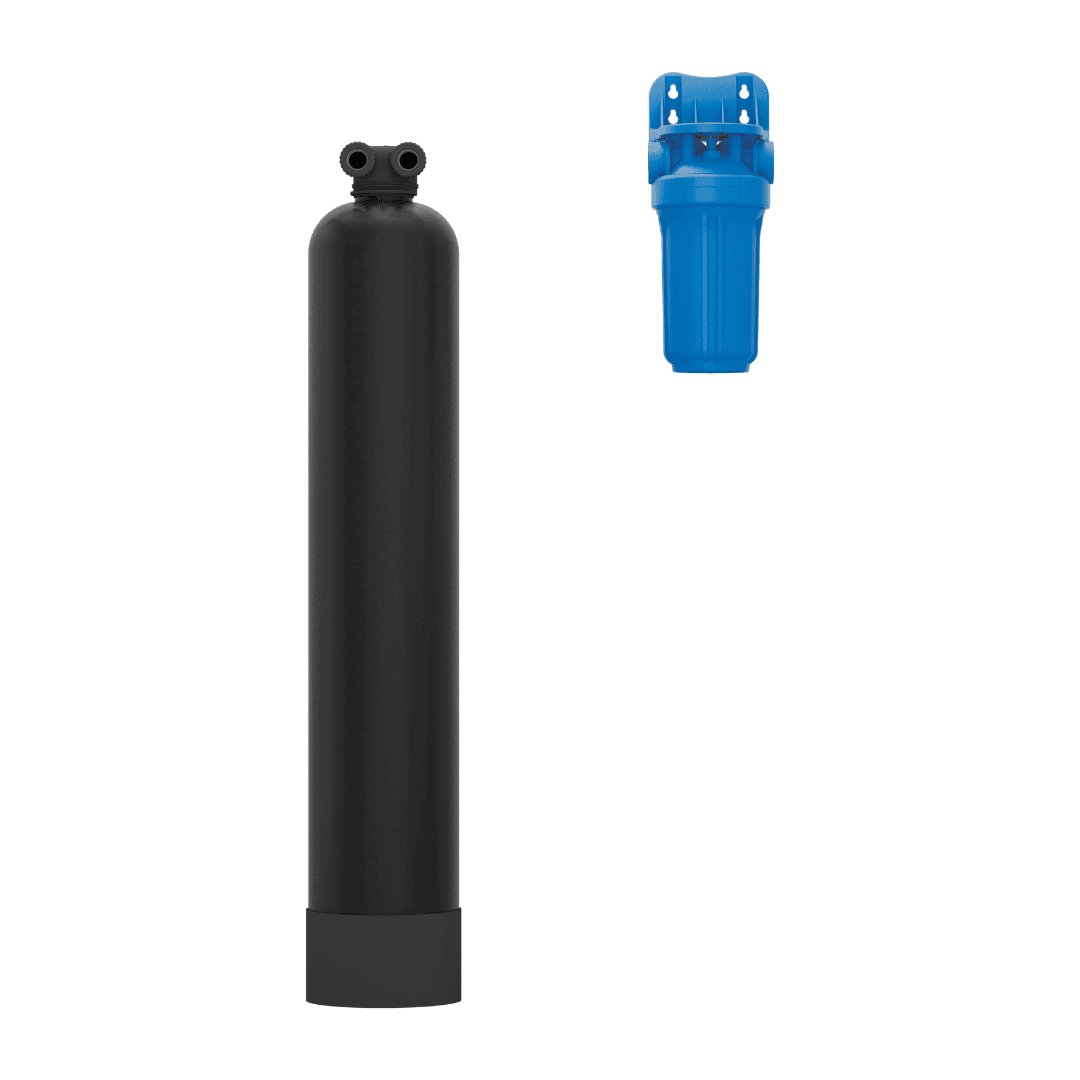
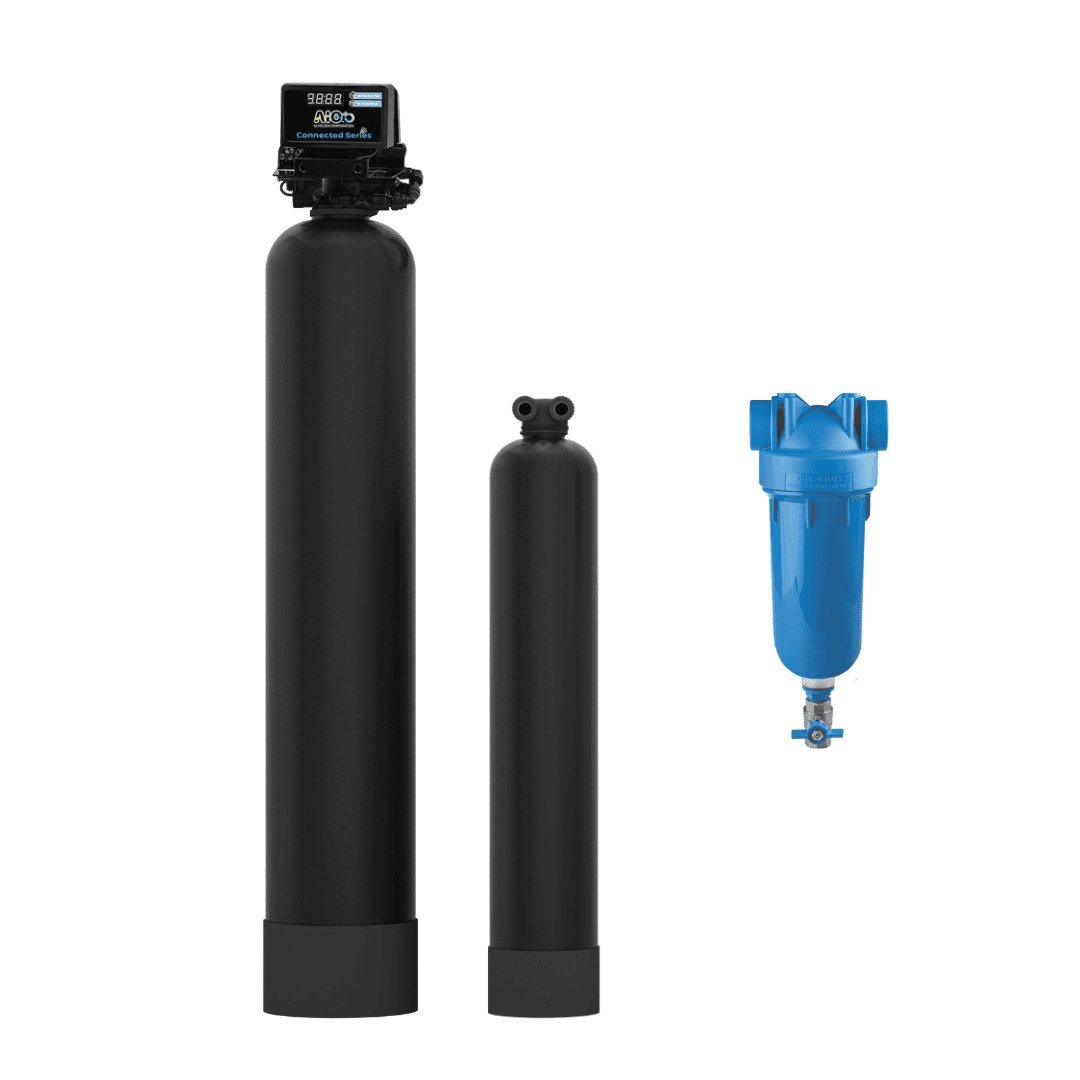
What each system actually removes
The CF1 and WF1 use completely different filtration technologies targeting completely different contaminants. This table tells you everything you need to know before choosing.
| Contaminant | CF1 | WF1 |
| Chlorine & chloramine | ✅ Yes | ❌ No |
| PFAS / PFOA | ✅ Yes | ❌ No |
| VOCs (volatile organic compounds) | ✅ Yes | ❌ No |
| Heavy metals (lead, mercury) | ✅ Yes | ❌ No |
| Iron (ferrous & ferric) | ❌ No | ✅ Yes — up to 7 PPM |
| Manganese | ❌ No | ✅ Yes — up to 1 PPM |
| Hydrogen sulfide (H2S) | ❌ No | ✅ Yes — up to 8 PPM |
| Sediment / particulates | ✅ Pre-filter | ✅ Backwash removes |
| Bacteria & viruses | ❌ No | ❌ No — add UV system |
| Hardness (scale) | ❌ No | ❌ No — add softener |
How each system works
The CF1 uses a catalytic carbon media tank. As water passes through, contaminants bind to the carbon surface — this is called adsorption. Carbon is highly effective at trapping chlorine, chloramines, PFAS, VOCs, and heavy metals. The media lasts approximately 1,000,000 gallons (roughly 10 years for most households) before it needs replacing. The system produces zero pressure drop — water pressure in equals water pressure out.
The WF1 uses air injection oxidation. An air pocket is automatically maintained at the top of the tank. As iron-rich water enters, it contacts oxygen, which converts dissolved ferrous iron (clear-water iron) into ferric iron (rust particles) that are physically captured in the media bed. The same process converts hydrogen sulfide gas into solid sulfur particles. Every night the system automatically backwashes itself, flushing accumulated iron and sulfur to drain. No chemicals needed — it runs on air only.
Side-by-side specs
| Spec | CF1 | WF1 |
| Filtration method | Catalytic carbon adsorption | Air injection oxidation |
| Primary targets | Chemicals, PFAS, VOCs, heavy metals | Iron, manganese, hydrogen sulfide |
| Flow rate (1–3 bath) | 9 GPM | 12 GPM |
| Flow rate (4–6 bath) | 12 GPM (CF4) | 15 GPM |
| Media life | ~1,000,000 gallons (~10 years) | ~10 years (auto-backwash) |
| Pressure drop | Zero | Minimal |
| Backwash required | No | Yes — automatic nightly |
| Chemicals required | No | No — air only |
| Bluetooth app | Yes (Connected Series) | Yes (Connected Series) |
| Warranty | Lifetime on tanks & valves | Lifetime on tanks & valves |
| Money-back guarantee | 6 months | 6 months |
| Price range | $800–$1,100 | $900–$1,500 |
| Made in USA | Yes | Yes |
For well water — this is almost always the WF1
If you're on a private well, the most common problems are iron, manganese, and hydrogen sulfide — not chlorine or PFAS. Municipal water systems add chlorine; wells do not. The orange staining on sinks and toilets, the rotten egg smell, and the metallic taste that well owners most frequently complain about are all WF1 problems, not CF1 problems.
The CF1 is useful for well owners who have chemical contamination alongside or instead of iron issues — typically wells near agricultural land (pesticides), industrial sites (VOCs, solvents), or wells that have been treated with chemicals. A water test will tell you which contaminants you're actually dealing with before you spend $800–$1,500 on the wrong system.
Running both — installation order is critical
Some well owners need both. If you have iron and sulfur issues plus chemical contamination, install the WF1 upstream of the CF1:
Running iron-rich water through the CF1's carbon media first will rapidly foul and damage it. The WF1 must always be upstream.
Decision guide — which do you actually need?
Iron deposits cause orange staining. The WF1 oxidizes dissolved iron before it can stain. The CF1 does not address iron.
Hydrogen sulfide gas causes the rotten egg smell. The WF1 oxidizes H2S into solid sulfur particles that are backwashed to drain. The CF1 carbon cannot effectively remove H2S at typical well water concentrations.
If your water smells of chlorine — from municipal supply or post-disinfection treatment — the CF1's catalytic carbon removes it effectively. The WF1 does not.
Some wells — near agricultural or industrial land — have both iron/sulfur and chemical contamination. Install WF1 first, CF1 downstream. Get a water test before buying either.
Neither system removes hardness. For hard water plus iron, the correct order is: WF1 → water softener → CF1 (if needed for chemicals).
Test your water before buying either system
A basic well water test costs $30–$80 at a local lab or via mail-in service. Before spending $800–$1,500 on either system, know what's in your water:
| Parameter | Action level | System needed |
| Iron (total) | Above 0.3 PPM | WF1 |
| Manganese | Above 0.05 PPM | WF1 |
| Hydrogen sulfide | Any detectable level | WF1 |
| Chlorine / chloramine | Any detectable level | CF1 |
| VOCs / PFAS | Any detectable level | CF1 |
| Hardness | Above 7 GPG | Water softener |
| Coliform bacteria | Any presence | UV sterilization system |
Our recommendation
For most private well owners, the Springwell WF1 is the right starting point. Iron, manganese, and hydrogen sulfide are the dominant well water problems across the United States, and the WF1 handles all three in one system — no chemicals, high flow rate, automatic maintenance, lifetime warranty.
The CF1 is the right choice for well owners with confirmed chemical contamination, or as a downstream addition to an existing WF1 to add an extra layer of filtration. If you're unsure, get a water test first. It costs $30–$80 and tells you exactly what you're dealing with.