Iron is the most common well water complaint in the US. It's not dangerous at typical levels but it makes your water look, taste, and smell terrible — and it destroys appliances and stains everything it touches.
What causes high iron in well water
- Iron-rich geology — groundwater naturally picks up iron as it percolates through iron-bearing rock and soil
- Corroding iron pipes — older iron plumbing leaches iron into the water supply
- Low pH (acidic water) — acidic water is more aggressive at dissolving iron from pipes and rock
- Seasonal variation — iron levels often spike after heavy rainfall as more surface water enters the aquifer
Iron levels and what they mean
| 0.3 PPM | EPA secondary standard — aesthetic limit. Below this, minimal issues. |
| 0.3–2 PPM | Noticeable taste and minor staining |
| 2–5 PPM | Significant staining, pronounced metallic taste, appliance damage |
| 5–10 PPM | Severe staining, clogged fixtures, heavy appliance damage |
| Above 10 PPM | Extreme — water may appear visibly orange from the tap |
Health effects of iron in well water
Iron is an essential nutrient and not classified as a health hazard at levels typically found in well water. The EPA secondary standard of 0.3 PPM is based on aesthetics (taste, odor, staining), not health. At very high levels (above 10+ PPM) iron can cause gastrointestinal upset, particularly in sensitive individuals, but most well water iron levels don't pose a direct health risk.
The real damage is to your home: stained sinks, toilets, laundry, and tile; shortened appliance life; clogged irrigation heads and fixtures.
Treatment for high iron
| Under 3 PPM | Water softener can handle incidentally — add iron-out resin cleaner monthly |
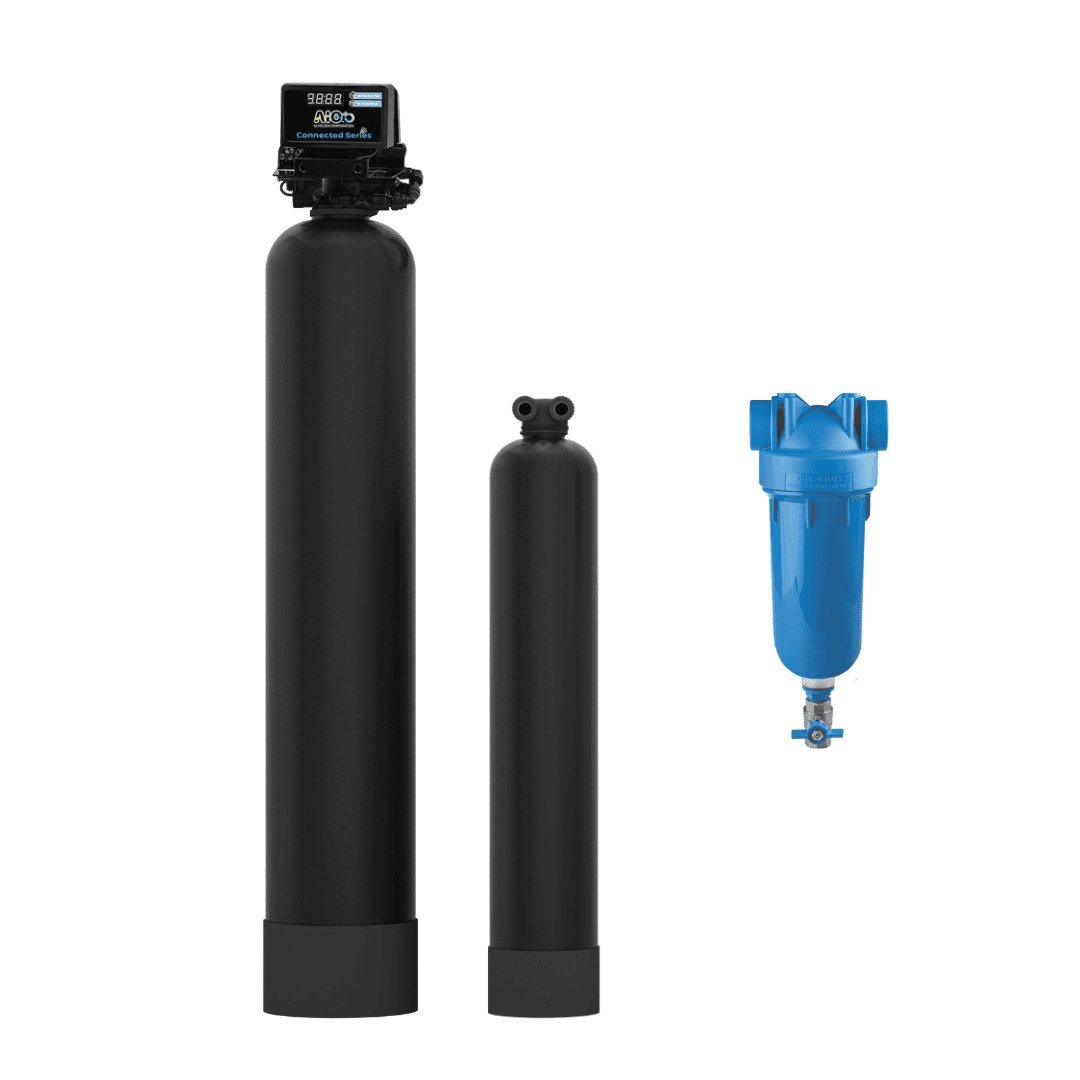
| 3–7 PPM | Air injection iron filter (Springwell WF1) — recommended as standalone or before softener |
| 7–30 PPM | Peroxide injection system (Matrixx InFusion) — air injection alone insufficient |
| Iron bacteria present | Peroxide injection (Matrixx InFusion) + UV — bacteria need both oxidation and disinfection |
For iron above 7 PPM or iron bacteria
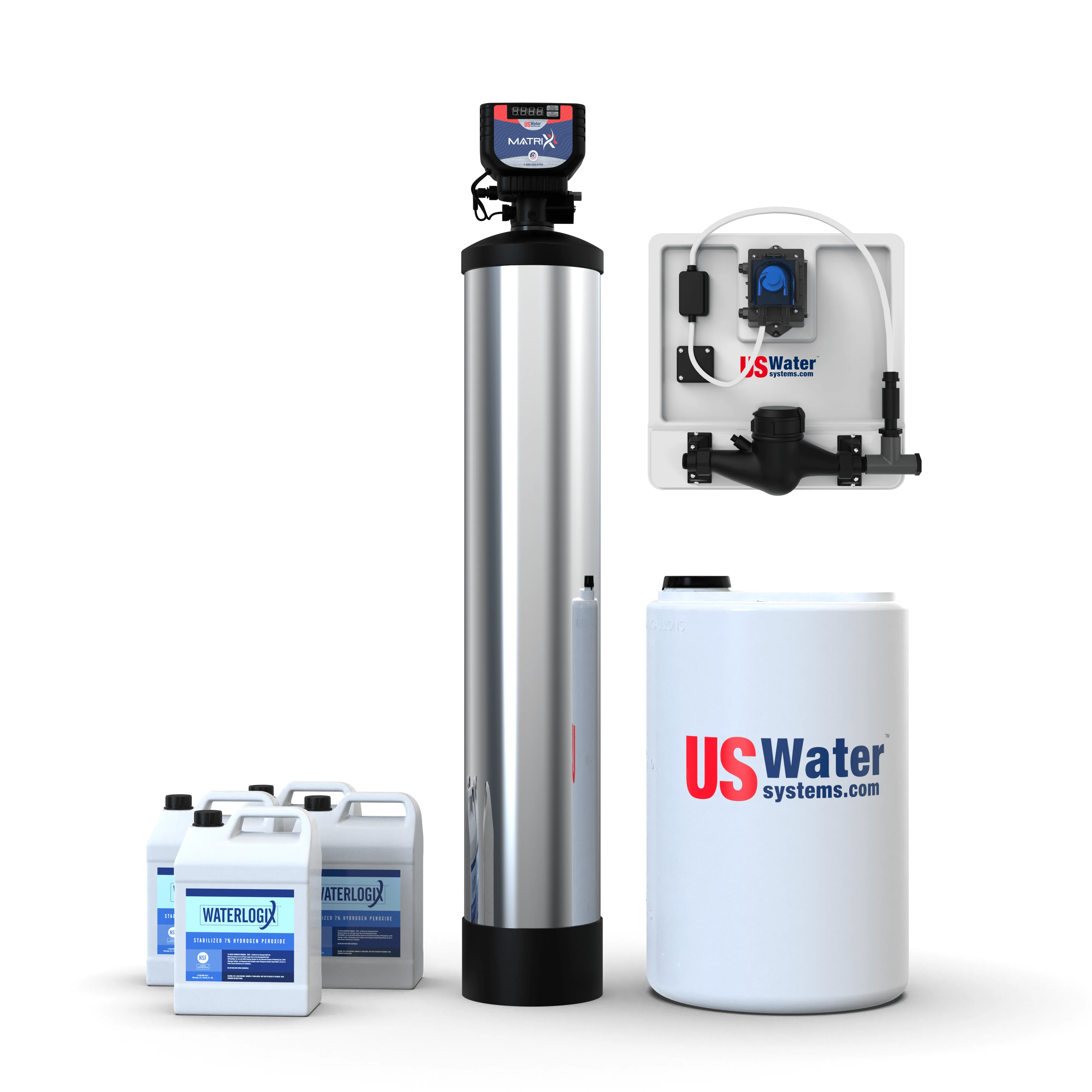
When iron levels climb above 7 PPM or iron bacteria are present, air injection systems can't keep up. The next-tier solution is peroxide injection — H2O2 is dosed into the water before filtration, oxidizing iron at concentrations far beyond what air alone can handle. The Matrixx InFusion is the residential-grade peroxide injection system from US Water Systems, rated for high iron loads.
Full guide: Dosing ratios, media compatibility, the disinfection warning, and commissioning — hydrogen peroxide well water treatment →