Why well water filtration is different from city water
City water is pre-treated before it reaches your home — chlorinated for bacteria, tested regularly, and held to EPA standards. Private well water has none of that. You're responsible for your own treatment, and the contaminants are fundamentally different.
Test your water before buying anything
A water test is the only way to know what filtration you actually need. An iron filter won't help bacteria. A UV system won't fix hardness. Buying without test data is guessing — and well water systems cost $800–$2,000 each. The Tap Score Well Explore test (~$149) covers 100+ parameters and takes guesswork completely off the table.
Types of whole house well water filters
No single system handles every well water problem. Here's what each type does and when you need it.
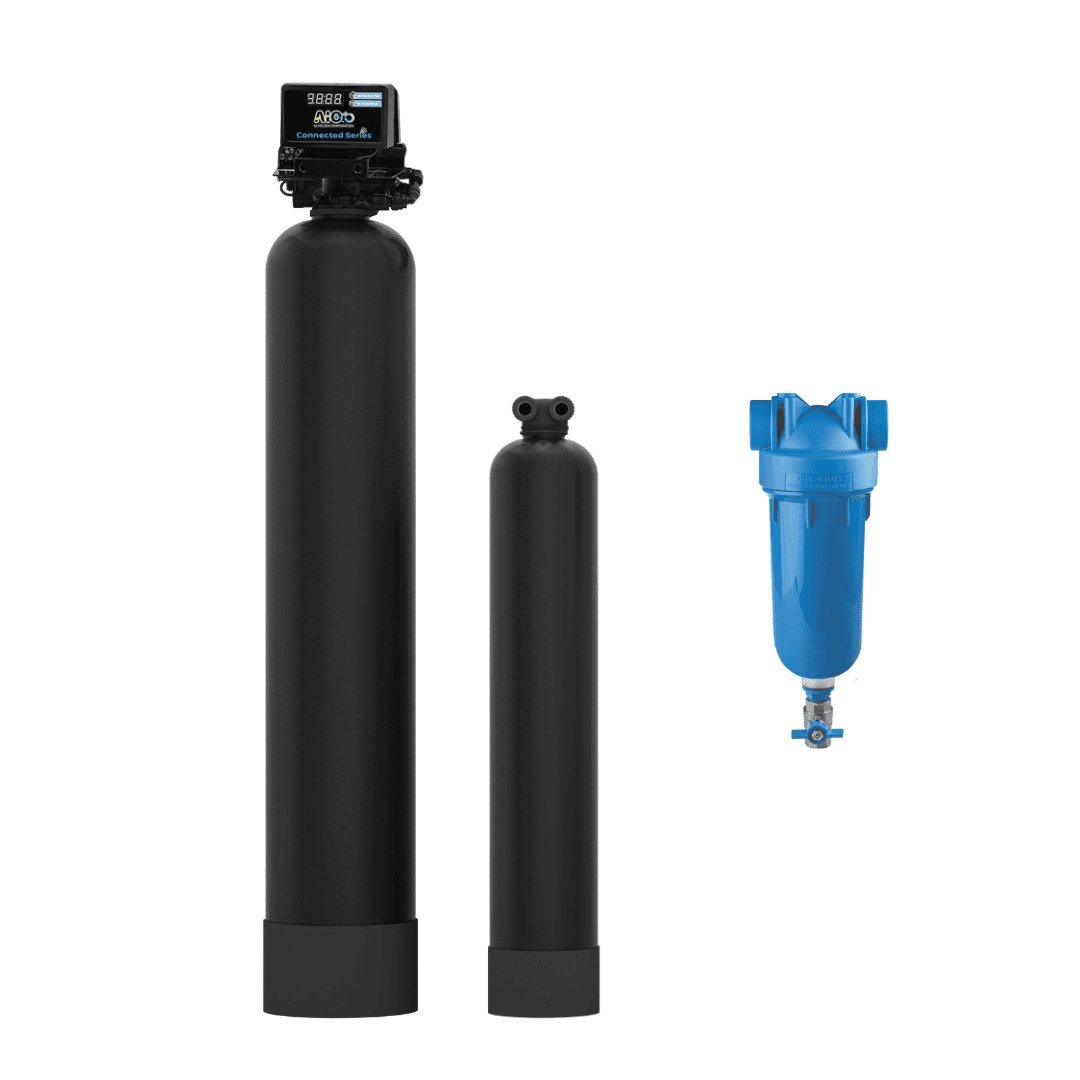
Air Injection Oxidation Filter
Best pick: Springwell WF1. Uses air to oxidize dissolved iron and sulfur, converting them to solid particles that are then filtered out. No chemicals, no media replacement — just an automatic backwash cycle. The standard solution for the most common well water problem.
Handles up to 7 PPM iron, 8 PPM H2S, 1 PPM manganese. 12–20 GPM depending on tank size. Lifetime warranty.
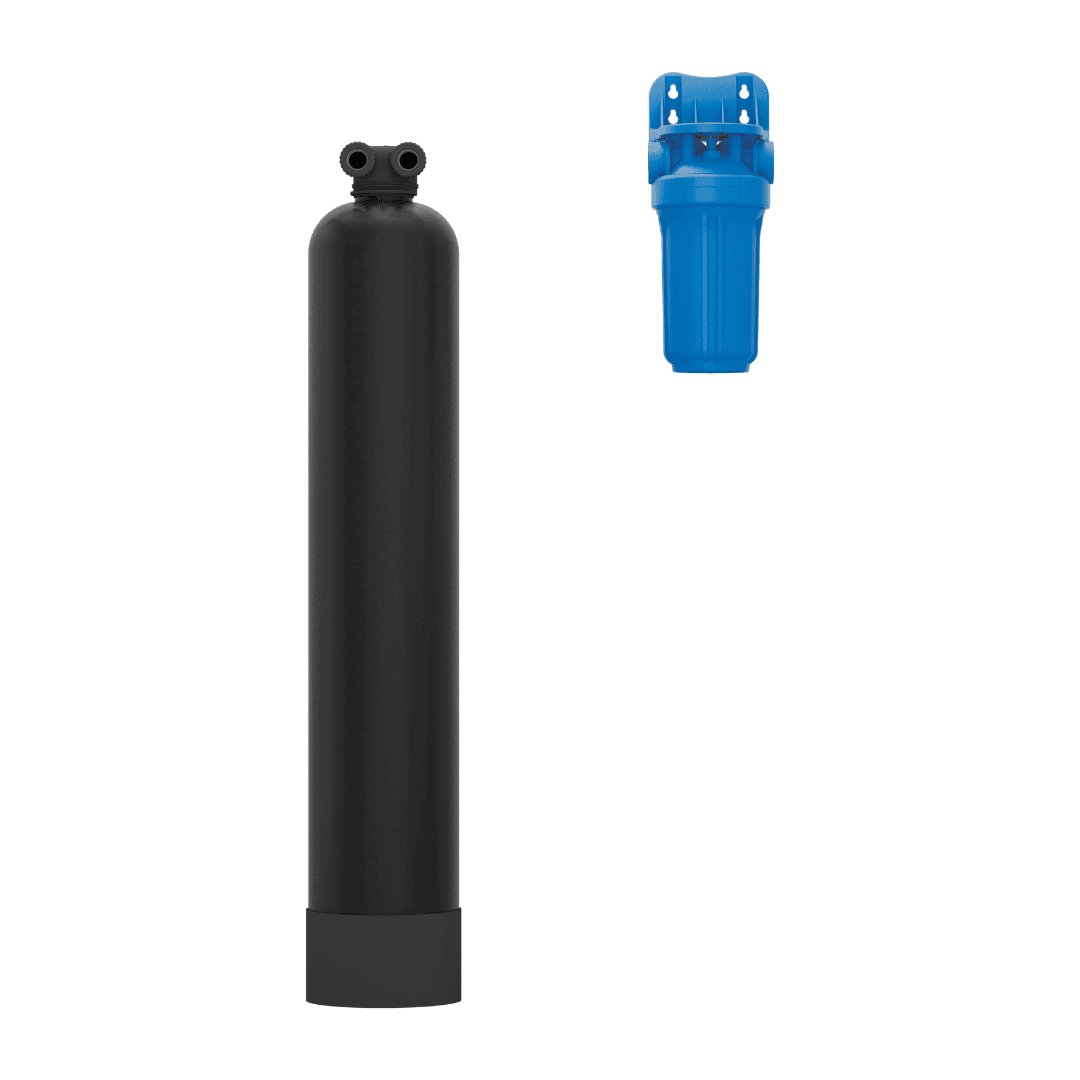
Whole House Carbon Filter
Best pick: Springwell CF1. Catalytic carbon removes PFAS, VOCs, chlorine, chloramines, pesticides, herbicides, and taste/odor compounds. Rated for 1 million gallons — roughly 10 years for an average household. Near-zero operating cost (one sediment pre-filter per year, ~$40).
Does not remove iron, bacteria, or hardness. Always install after an iron filter if iron is present — iron will exhaust carbon media prematurely.
CF1 review →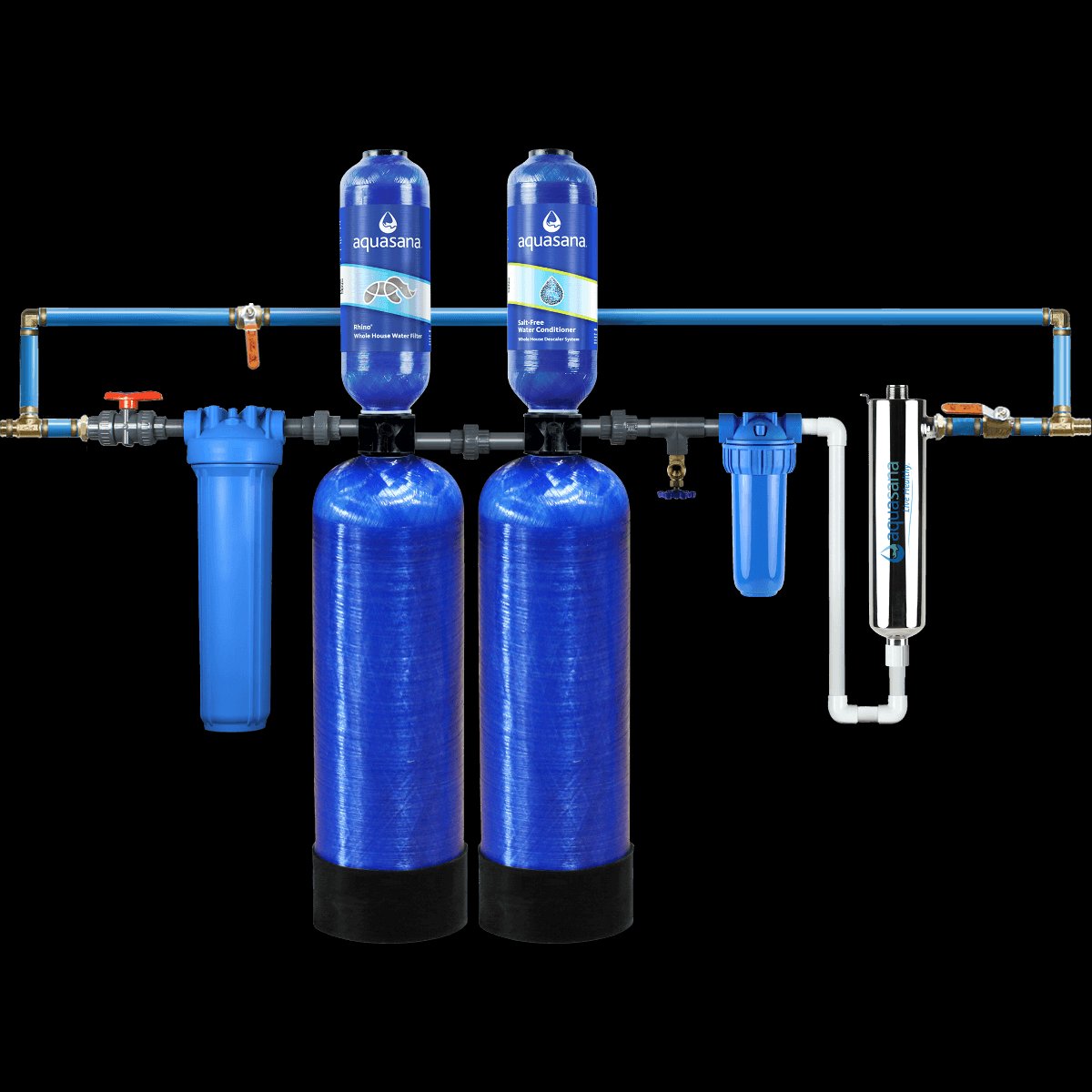
UV Well Water System
Best bundled pick: Aquasana Rhino Well + UV. UV is the only whole-house method for killing bacteria, viruses, and protozoa without chemicals. The Aquasana system bundles sediment + carbon + UV in a single NSF-certified package designed for private wells. Annual UV lamp replacement (~$50–$80).
Critical: UV must be the last stage in any system — it requires clear water (turbidity below 1 NTU) to work effectively. Always install after iron, carbon, and softener stages.
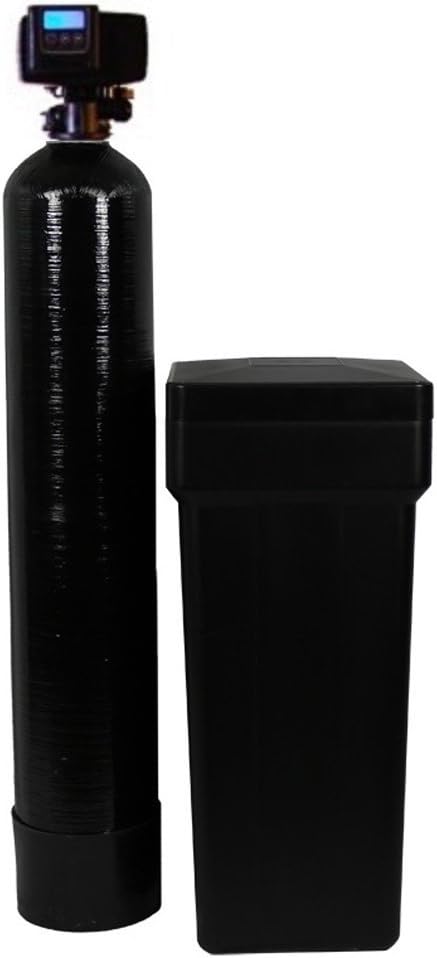
Ion Exchange Water Softener
Best pick: Fleck 5600SXT. Ion exchange removes calcium and magnesium (hardness) from water, eliminating scale buildup in pipes, water heaters, and appliances. The Fleck 5600SXT is the most common residential softener — proven, DIY-friendly, with parts available everywhere. Requires salt (~$120–$200/year).
For wells with iron, always install an iron filter upstream first. Iron above 3 PPM will foul the resin bed within months and void most warranties.
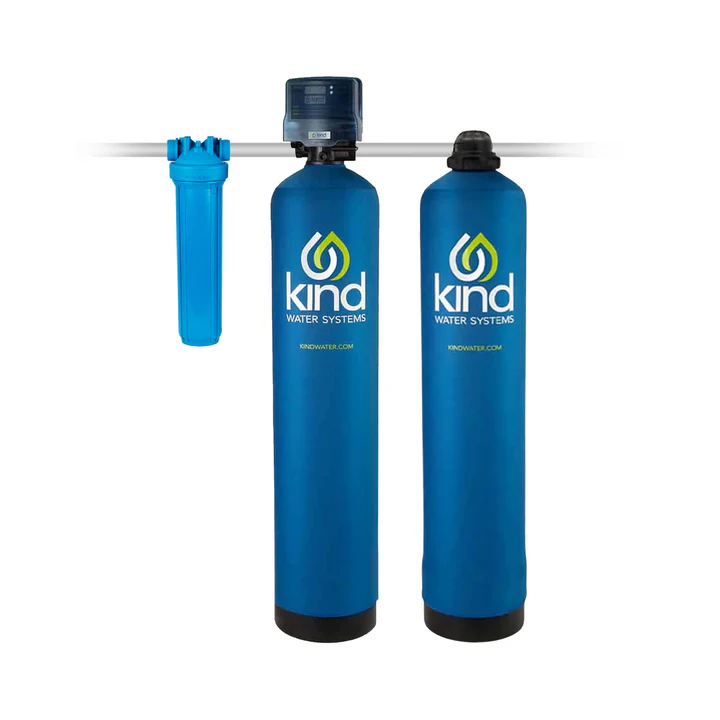
Salt-Free Water Conditioner
Best pick: Kind Water WS-6000. TAC conditioning changes the crystal structure of hardness minerals so they don't form scale — without salt, brine discharge, or electricity. Zero maintenance. Good for moderate hardness (under 25 GPG) where scale prevention is the goal but true softening isn't essential.
Requires iron below 0.3 PPM to function correctly. Does not produce soft water by test — hardness minerals remain in suspension. For truly soft water and spotless dishes, use a salt softener.
Kind Water WS-6000 review →Which system do you need? Pick by problem
Orange stains, metallic taste, or rust-colored water
→ You have iron. If iron is above 0.3 PPM, you need a dedicated iron filter. Above 3 PPM, a standard softener alone won't cut it — you need air injection oxidation.
Rotten egg smell or sulfur odor
→ Hydrogen sulfide (H2S). The Springwell WF1 handles both iron and sulfur in a single tank. For sulfur-only wells, an air injection or aeration system works well.
Scale buildup, spotty dishes, stiff laundry
→ Hard water. If hardness is above 7 GPG, a water softener will eliminate scale and extend appliance life significantly. If iron is also present, install an iron filter first.
Positive coliform test or bacteria concerns
→ UV disinfection is the only reliable whole-house method for bacteria and viruses without chemicals. Shock chlorinate the well first, then install UV as the last stage of your system.
Aquasana Well + UV · UV system guide → · Coliform treatment →
Chemical taste, PFAS, or agricultural runoff concerns
→ Catalytic carbon filtration. The Springwell CF1 has the longest media life in its class and handles PFAS, VOCs, pesticides, and herbicides. Confirm with a comprehensive water test before buying.
Blue-green staining or pinhole pipe leaks
→ Acidic water (low pH). An acid neutralizer (calcite or Corosex media) raises pH to a safe level and stops pipe corrosion. Test pH — anything below 6.8 needs treatment before damage occurs.
The correct installation order
Installing systems in the wrong order can foul media, reduce performance, and void warranties. This is the sequence that works:
Sediment pre-filter
5–20 micron cartridge, $50–$150. Catches sand, silt, and particles that would damage or clog every downstream system. Replace the cartridge every 3–6 months depending on water quality.
Iron / sulfur filter if iron > 0.3 PPM or sulfur present
Must come before the softener. Iron above 3 PPM will destroy softener resin within months. The WF1 backwashes automatically — connect a drain line within 20 feet.
Acid neutralizer if pH < 6.8
Raises pH to 7.0–7.5 to stop pipe corrosion and blue-green staining. Calcite media is self-limiting (won't over-neutralize). Corosex is more aggressive and used for very acidic water (pH below 6.0).
Water softener if hardness > 7 GPG
Ion exchange removes calcium and magnesium. Needs a dedicated drain for brine discharge during regeneration. Program based on your water hardness test results — not the default setting.
Whole house carbon filter PFAS, VOCs, taste
Always install after iron has been removed — residual iron exhausts carbon media prematurely. Catalytic carbon (CF1) is far more effective than standard activated carbon for chloramines and PFAS.
UV disinfection bacteria, viruses, coliform
Always last. UV requires clear water to work — turbidity above 1 NTU dramatically reduces effectiveness. Replace the UV lamp annually regardless of appearance (UV output degrades before the lamp fails visibly).
What a whole house well water system actually costs
DIY installation saves $200–$500 per system. Most well owners need 2–3 systems, not all 6. A water test tells you exactly which stages to skip.
Frequently asked questions
Is a whole house filter different from a well water filter?
A whole house filter treats water at the point of entry before it reaches any tap or appliance. "Well water filter" refers to a whole house system designed for the specific contaminants in private wells — iron, sulfur, bacteria, and hardness. Most city water filters focus on chlorine and taste, which aren't the primary concerns for well owners.
Do I need a sediment filter before my whole house filter?
Yes, in most cases. Well water carries sand, silt, and fine particles that clog downstream systems and damage UV lamp sleeves. A simple 5–20 micron cartridge filter ($50–$150) before the first major system is cheap insurance. Replace the cartridge every 3–6 months — if it loads up faster, that's a sign your well casing may need inspection.
Will a whole house filter slow down my water pressure?
A properly sized system won't noticeably drop pressure. The Springwell WF1 flows at 12–20 GPM (depending on configuration), and the CF1 flows at 9 GPM — both well above typical household peak demand of 4–6 GPM. Undersized systems or clogged sediment pre-filters are the most common cause of pressure issues. Size the system to your home's peak demand and it's a non-issue.
How often do whole house well water filters need maintenance?
Air injection iron filters (WF1): annual backwash confirmation, no media replacement. Carbon filters (CF1): sediment pre-filter annually (~$40), media rated 1 million gallons. Softeners: salt every 6–8 weeks, resin lasts 15–20 years. UV lamps: annually ($50–$80). Sediment cartridges: every 3–6 months. An annual water test confirms all systems are performing correctly.